Mobile technology has transformed the way businesses operate. Enterprise mobile applications are no longer limited to large corporations. Organizations of all sizes now use mobile apps to improve communication, automate workflows, manage field operations, and deliver better customer experiences.
Unlike consumer apps, enterprise applications are designed to solve business challenges, increase efficiency, and integrate with existing systems such as CRM, ERP, HR, and inventory management platforms.
In this guide, you'll learn what enterprise mobile app development is, why it matters, the challenges involved, and the best practices for building successful business applications.
What Is Enterprise Mobile App Development?
Enterprise mobile app development is the process of creating applications that support business operations rather than focusing solely on consumers.
These applications are used by:
- Employees
- Managers
- Sales teams
- Field technicians
- Warehouse staff
- Executives
- Business partners
- Customers
Enterprise apps often connect with internal systems and automate tasks that were previously handled manually.
For organizations evaluating a first build or a major platform upgrade, working with an experienced mobile app development company helps align product scope with operational needs, security requirements, and long-term scalability.
Benefits of Enterprise Mobile Applications
Businesses invest in enterprise apps because they deliver measurable operational improvements.
Key benefits include:
- Faster business processes
- Better employee productivity
- Improved customer service
- Real-time access to business data
- Reduced paperwork
- Better collaboration
- Increased operational efficiency
- Lower long-term operating costs
Enterprise applications help organizations respond more quickly to changing business needs.
When apps are connected to core business systems, teams spend less time switching between tools and more time acting on accurate, up-to-date information.
Common Types of Enterprise Mobile Apps
Enterprise applications are built for many different business functions.
Examples include:
- Employee self-service apps
- Field service management apps
- Inventory management apps
- Sales enablement apps
- CRM mobile applications
- ERP companion apps
- Project management tools
- Expense management apps
- Business intelligence dashboards
- Customer support portals
Each solution is tailored to the organization's workflows and objectives.
Essential Features of Enterprise Apps
Enterprise applications often require functionality beyond what consumer apps need.
Common features include:
- Secure authentication
- Role-based access control
- Single sign-on
- Offline functionality
- Document management
- Push notifications
- Workflow automation
- File sharing
- Reporting dashboards
- Audit logs
The feature set should align with the organization's operational requirements.
Strong UI/UX design is especially important in enterprise apps because employees use them daily. Software that feels intuitive reduces training time and improves adoption.
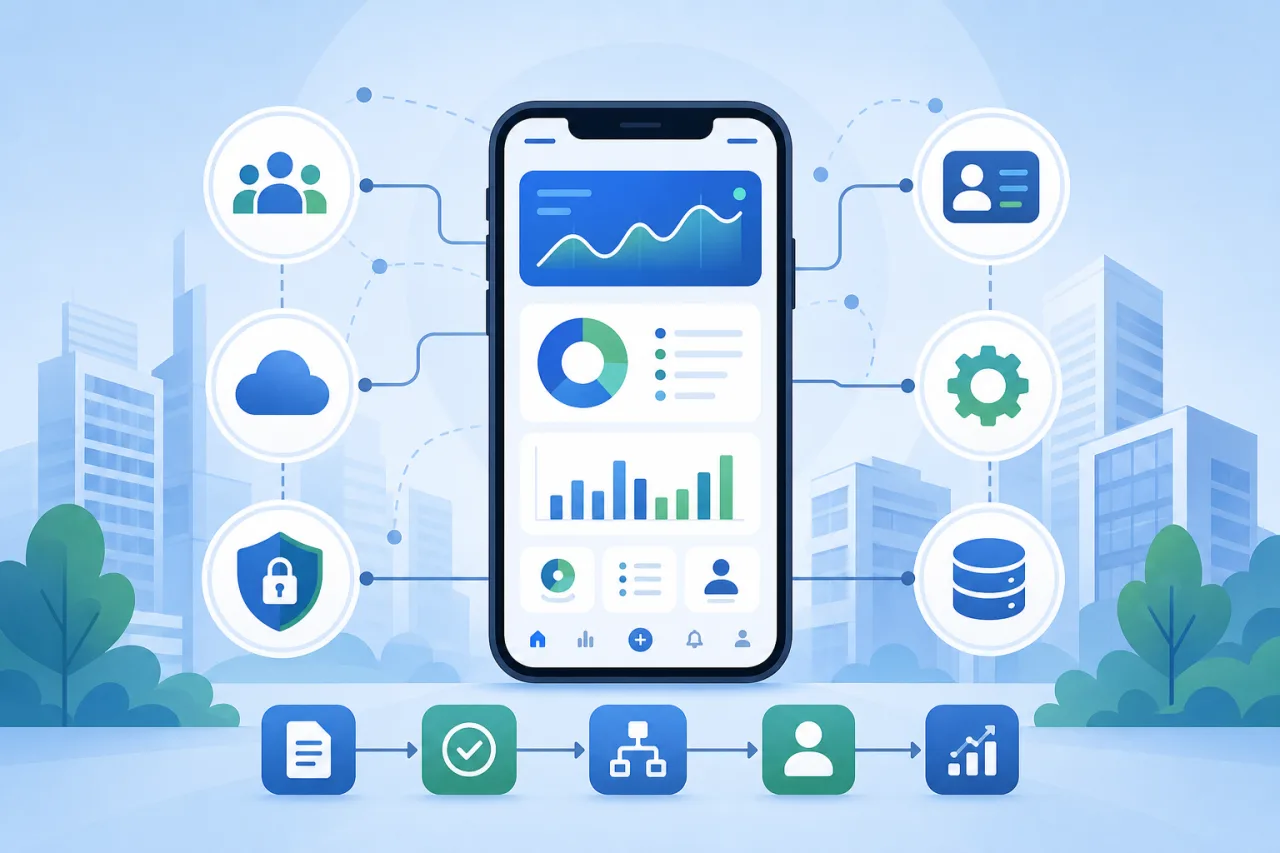
Integration With Business Systems
One of the defining characteristics of enterprise apps is integration.
Applications frequently connect with:
- CRM platforms
- ERP systems
- HR software
- Accounting solutions
- Inventory management systems
- Cloud storage
- Customer support platforms
- Business intelligence tools
Well-designed integrations reduce duplicate work and improve data accuracy.
Our API development and integration services help businesses connect mobile applications with existing platforms securely and reliably.
For larger digital ecosystems, enterprise software development and custom software development often work alongside mobile projects to unify workflows across web, cloud, and mobile environments.
Security Considerations
Enterprise applications often handle sensitive business information.
Security should include:
- Data encryption
- Secure authentication
- Multi-factor authentication
- Role-based permissions
- Secure API communication
- Mobile device management compatibility
- Compliance with industry regulations
Security should be incorporated throughout the development lifecycle, not added as an afterthought before launch.
Challenges in Enterprise Mobile Development
Enterprise projects often involve additional complexity.
Common challenges include:
- Legacy system integration
- Data migration
- Complex approval workflows
- User adoption
- Regulatory compliance
- Performance at scale
- Multi-device compatibility
- Change management
Addressing these challenges early helps improve project outcomes and reduces costly rework later in the project.
If your organization is comparing vendors, our guide on how to choose the right mobile app development company outlines the questions CTOs, IT leaders, and operations teams should ask before signing a contract.
Best Practices for Enterprise App Development
Successful enterprise projects typically follow these practices.
Start With Business Goals
Identify the operational problems the application will solve and define measurable objectives such as reduced processing time, faster reporting, or improved field response rates.
Involve Stakeholders Early
Gather feedback from employees, managers, IT teams, and executives during planning. Early input improves adoption and reduces scope changes later.
Focus on User Experience
Employees expect enterprise software to be as easy to use as consumer applications. Poor usability is one of the most common reasons internal apps fail after launch.
Build for Scalability
Design the application to support additional users, departments, and future functionality without requiring a full rebuild.
Prioritize Security
Protect sensitive information through secure architecture, authentication, and regular security testing.
Plan for Ongoing Maintenance
Enterprise applications require continuous updates, support, and performance optimization. Mobile app maintenance is essential for security, compatibility, and long-term reliability.
Why Cross-Platform Development Works Well for Enterprise Apps
Many organizations choose Flutter or React Native for enterprise development because they provide:
- Shared codebase
- Faster development
- Lower maintenance costs
- Consistent user experience
- Support for Android and iOS
Cross-platform development is particularly valuable for organizations supporting multiple device types and distributed teams.
We deliver enterprise mobility solutions through Flutter app development and React Native development when clients need efficient multi-platform deployment.
Industries Using Enterprise Mobile Apps
Enterprise applications deliver value across many industries.
Examples include:
- Healthcare
- Manufacturing
- Construction
- Logistics
- Retail
- Financial services
- Education
- Hospitality
- Real estate
- Professional services
Each industry benefits from applications designed around its specific workflows, compliance requirements, and user roles.
How Kodu Media Builds Enterprise Mobile Solutions
At Kodu Media, we develop enterprise mobile applications that improve productivity and support digital transformation.
Our services include:
- Business analysis
- Enterprise architecture planning
- UI and UX design
- Android development
- iOS development
- Flutter development
- React Native development
- API integration
- Cloud infrastructure
- Testing and quality assurance
- Long-term maintenance and support
We work closely with clients to ensure every application aligns with business goals and integrates seamlessly with existing systems.
For product-led organizations building subscription or platform-based solutions, our SaaS development company team can also support backend architecture, admin dashboards, and scalable cloud infrastructure alongside the mobile experience.
Organizations adding intelligent automation to enterprise workflows can explore AI development services and AI features for modern mobile apps as part of a broader digital strategy.
Final Thoughts
Enterprise mobile applications are becoming essential tools for businesses that want to improve efficiency, strengthen collaboration, and deliver better customer experiences.
Whether you need an employee productivity app, a field service solution, or a customer-facing business platform, careful planning and the right technology are critical to long-term success.
By focusing on business objectives, security, scalability, and user experience, organizations can build enterprise applications that deliver measurable value for years to come.
If you're planning an enterprise mobile application, Kodu Media can help you design, develop, and maintain a solution tailored to your organization's unique requirements.
Contact our team today to discuss your enterprise mobility strategy.
Frequently Asked Questions
What is an enterprise mobile app?
An enterprise mobile app is designed to support business operations, employees, partners, or customers by improving workflows, productivity, and access to business data.
How are enterprise apps different from consumer apps?
Enterprise apps focus on business processes, security, integrations, and operational efficiency, while consumer apps primarily target end users and public audiences.
Can enterprise apps integrate with existing business software?
Yes. Enterprise applications commonly integrate with CRM, ERP, HR, accounting, inventory, and other business systems.
Why are security and compliance important?
Enterprise applications often manage sensitive company and customer data, making strong security practices and compliance essential.
Does Kodu Media develop custom enterprise mobile applications?
Yes. We build secure, scalable enterprise mobile applications tailored to your workflows, business objectives, and technology ecosystem.