Businesses today have more options than ever when it comes to delivering digital experiences. In addition to traditional websites and native mobile applications, Progressive Web Apps (PWAs) have become a popular choice for companies looking to provide app-like functionality through a web browser.
Both PWAs and mobile apps offer unique advantages. The right solution depends on your audience, business objectives, budget, required features, and long-term digital strategy.
In this guide, we'll compare Progressive Web Apps and mobile apps to help you determine which option is the best fit for your business.
What Is a Progressive Web App?
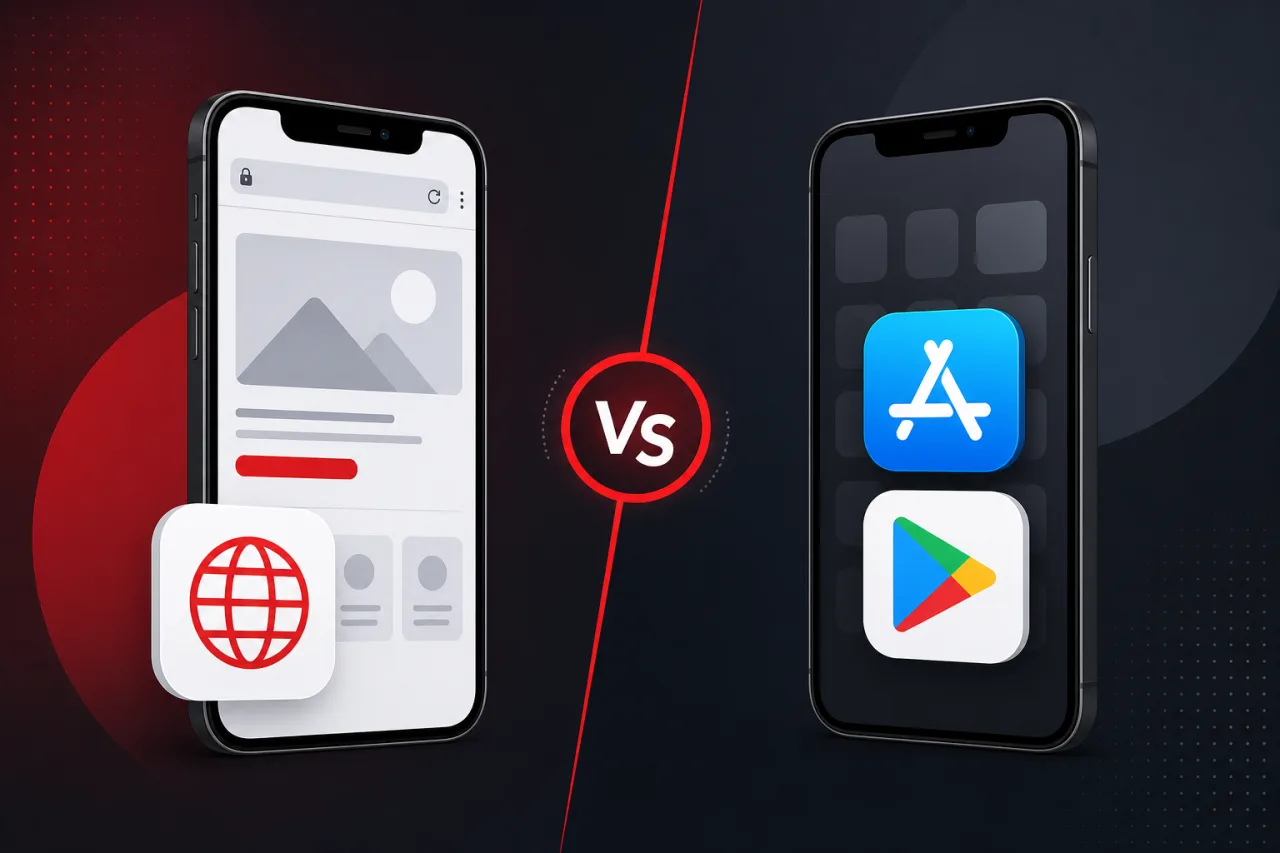
A Progressive Web App is a web application that uses modern browser technologies to deliver an app-like experience.
Users can:
- Access it through a web browser
- Add it to their home screen
- Receive push notifications on supported devices
- Use certain features offline
- Enjoy faster loading with cached content
Unlike traditional mobile apps, a PWA does not usually require installation through an app store.
Because PWAs are built on web technology, they often align well with a strong website design and development strategy that prioritizes speed, SEO, and cross-device accessibility.
What Is a Mobile App?
A mobile app is software developed specifically for smartphones and tablets.
Apps are typically downloaded from:
- Apple App Store
- Google Play Store
Mobile apps can access device hardware and operating system features more deeply than web applications, making them suitable for more complex use cases.
If your product requires advanced functionality, a dedicated mobile app development company can help you evaluate native, cross-platform, and hybrid approaches before you commit to a build.
PWA vs Mobile App: Quick Comparison
| Feature | Progressive Web App | Mobile App |
|---|---|---|
| Installation | Optional | Required |
| App Store Approval | Not required | Required |
| Offline Support | Limited to supported features | Extensive |
| Device Hardware Access | Limited | Full |
| Push Notifications | Supported on many devices | Fully supported |
| Performance | Very good | Excellent |
| Development Cost | Lower | Higher |
| User Experience | App-like | Native experience |
Development Cost
Cost is often a deciding factor.
Progressive Web Apps
PWAs usually cost less because they are built as web applications that work across multiple devices.
Businesses benefit from:
- One codebase
- Lower maintenance costs
- Faster development
- Easier updates
For startups testing demand before investing in a full app store launch, pairing a PWA with an MVP development strategy can reduce upfront risk.
Mobile Apps
Mobile applications generally require more development effort, especially when supporting both Android and iOS.
Costs increase with:
- Native development
- Advanced device features
- Complex integrations
- App store publishing requirements
For feature-rich applications, the additional investment may provide greater long-term value. Our guide on how much mobile app development costs in 2026 breaks down typical budget ranges by app complexity.
User Experience
Both solutions provide excellent user experiences when designed correctly.
Progressive Web Apps
PWAs offer:
- Fast loading
- Responsive layouts
- Home screen installation
- Offline support for selected features
- Smooth navigation
Mobile Apps
Mobile apps provide:
- Native interactions
- Better performance
- Full hardware integration
- Advanced animations
- Richer user experiences
Applications requiring intensive interaction generally perform better as native or cross-platform apps. If you are comparing frameworks, see Flutter vs React Native: which framework is better? and native vs cross-platform app development.
Performance
PWAs have improved significantly thanks to modern browser technologies.
However, mobile apps still provide advantages for:
- Graphics-intensive applications
- Complex animations
- Large datasets
- Real-time processing
- Offline functionality
For content-driven or service-based businesses, a PWA may provide more than enough performance. Businesses focused on maximum speed and polish often choose a React.js development company or Next.js development company to build fast, modern web experiences that support PWA capabilities.
Access to Device Features
Mobile apps offer broader access to smartphone capabilities, including:
- Camera
- GPS
- Bluetooth
- NFC
- Biometrics
- Contacts
- Calendar
- Background services
PWAs support some device features but remain more limited depending on the browser and operating system.
Search Engine Visibility
One major advantage of PWAs is discoverability.
Because PWAs are web applications, they can be indexed by search engines, making them easier to find through organic search.
Traditional mobile apps rely more heavily on App Store Optimization (ASO) and marketing efforts to drive downloads.
Businesses focused on SEO often benefit from combining a strong website with a PWA. Learn more in our guide on how to improve website SEO.
Maintenance
Both solutions require ongoing maintenance.
Progressive Web Apps
Maintenance typically includes:
- Security updates
- Performance improvements
- Browser compatibility
- Feature enhancements
Mobile Apps
Maintenance includes:
- Operating system compatibility
- App store compliance
- Bug fixes
- Security updates
- Performance optimization
Choosing the right maintenance strategy helps extend the lifespan of your digital product. See why mobile app maintenance is critical after launch for what to plan after release.
Which Businesses Should Choose a PWA?
A Progressive Web App may be the right choice if you:
- Want a lower development budget
- Need a fast launch
- Focus on content delivery
- Want better SEO visibility
- Do not require advanced hardware features
- Serve users across multiple devices
Examples include:
- News websites
- Blogs
- Business directories
- Restaurant websites
- Service providers
- Event platforms
Which Businesses Should Choose a Mobile App?
A mobile app is often the better solution if you need:
- Advanced device integration
- Push notifications across all supported platforms
- Offline functionality
- Secure user authentication
- High-performance graphics
- Personalized user experiences
Examples include:
- Banking apps
- Healthcare apps
- Delivery platforms
- Ride-sharing apps
- Fitness apps
- Marketplace applications
- Enterprise business tools
Not sure where to start? Read how to validate a mobile app idea before development to pressure-test demand before you build.
Can You Have Both?
Yes.
Many successful businesses combine:
- A responsive website
- A Progressive Web App
- A native or cross-platform mobile app
This approach allows businesses to improve search visibility while delivering rich mobile experiences to loyal customers.
How Kodu Media Helps Businesses Choose
At Kodu Media, we help businesses evaluate the best technology based on their objectives rather than recommending the same solution for every project.
Our expertise includes:
- Progressive Web App development
- Mobile app development
- Flutter development
- React Native development
- Website development
- UI and UX design
- API integration
- Performance optimization
- Ongoing maintenance and support
We recommend solutions that align with your business goals, target audience, and growth plans.
Final Thoughts
Progressive Web Apps and mobile apps each offer unique advantages.
A PWA can be an excellent choice for businesses seeking a cost-effective, SEO-friendly, and fast-to-deploy solution. A mobile app is often the better option when advanced functionality, deep device integration, and a premium user experience are priorities.
The best decision depends on your business objectives, user expectations, and long-term digital strategy.
If you're unsure which approach is right for your business, Kodu Media can help you evaluate your options and build a solution that supports your goals.
Contact us today for a free consultation and discover whether a Progressive Web App, a mobile app, or a combination of both is the best investment for your business.
Frequently Asked Questions
Is a Progressive Web App the same as a mobile app?
No. A Progressive Web App runs through a web browser and offers app-like functionality, while a mobile app is installed directly on a device through an app store.
Are PWAs less expensive to build?
In many cases, yes. PWAs generally require a single web-based codebase, reducing development and maintenance costs.
Can a PWA work offline?
Yes. PWAs can support offline functionality for certain features using modern browser technologies, although they may not match the offline capabilities of native mobile apps.
Which option is better for SEO?
PWAs are easier for search engines to index because they function as websites. Mobile apps rely more on App Store Optimization and other marketing channels.
Can Kodu Media build both PWAs and mobile apps?
Yes. We develop Progressive Web Apps, native mobile apps, and cross-platform applications based on your business requirements.