Modern businesses rely on multiple software platforms to manage operations, customers, finances, inventory, and communication. Customer Relationship Management (CRM) systems, Enterprise Resource Planning (ERP) platforms, eCommerce stores, accounting software, payment gateways, and mobile applications all generate valuable data.
However, these systems only reach their full potential when they work together.
API integration makes this possible by allowing applications to securely exchange information and automate business processes. Instead of manually transferring data between systems, businesses can create connected workflows that improve efficiency, reduce errors, and provide better customer experiences.
In this guide, you'll learn what API integration is, why it matters, common business use cases, implementation best practices, and how API integration supports digital transformation.
What Is API Integration?
API stands for Application Programming Interface.
An API allows two or more software applications to communicate and exchange data securely.
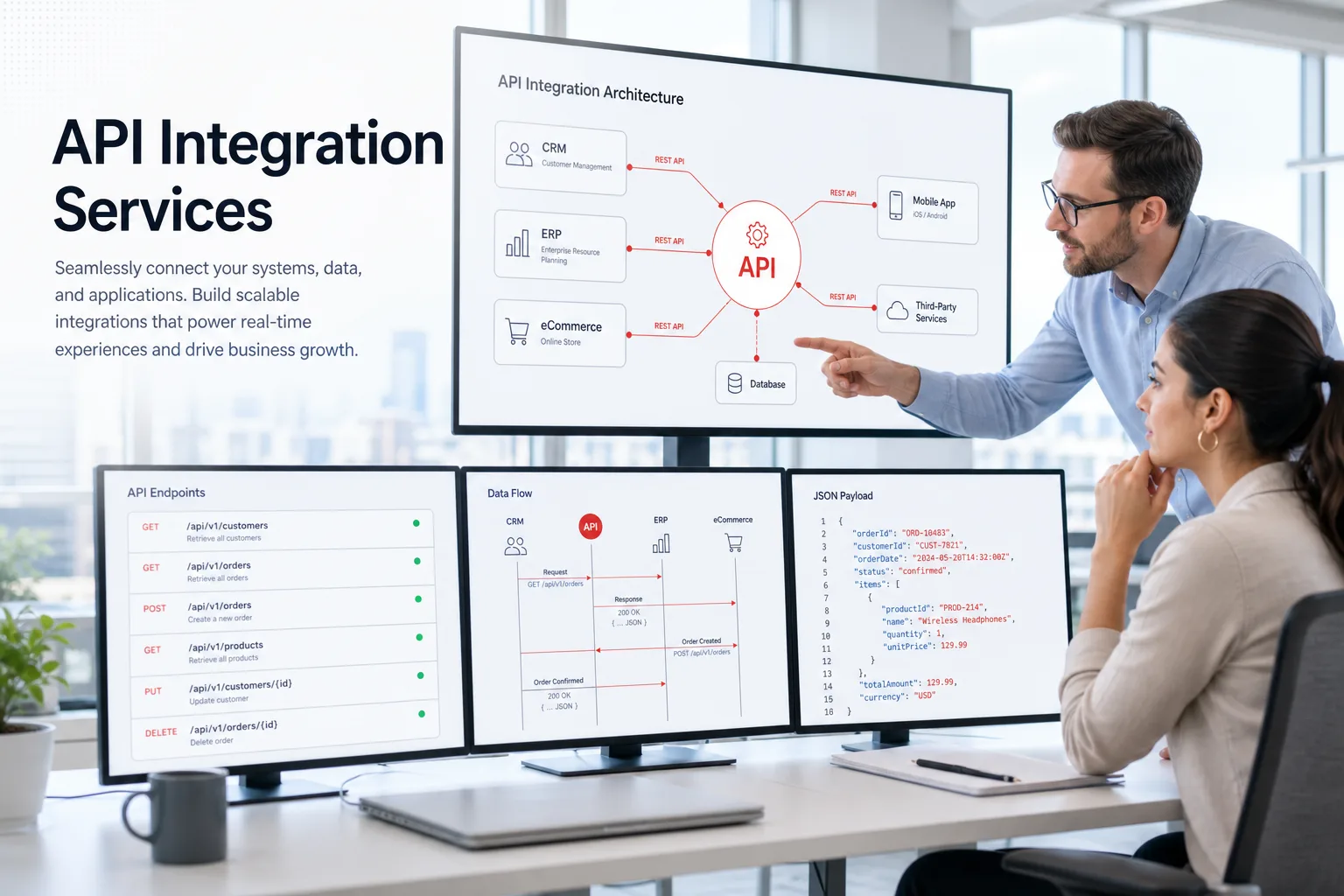
For example, when an online customer places an order, APIs can automatically:
- Update inventory
- Create an invoice
- Send order confirmation emails
- Notify the shipping provider
- Update the CRM
- Trigger accounting entries
Without APIs, these tasks often require manual work or disconnected systems.
Why API Integration Matters
Businesses rarely operate using a single application.
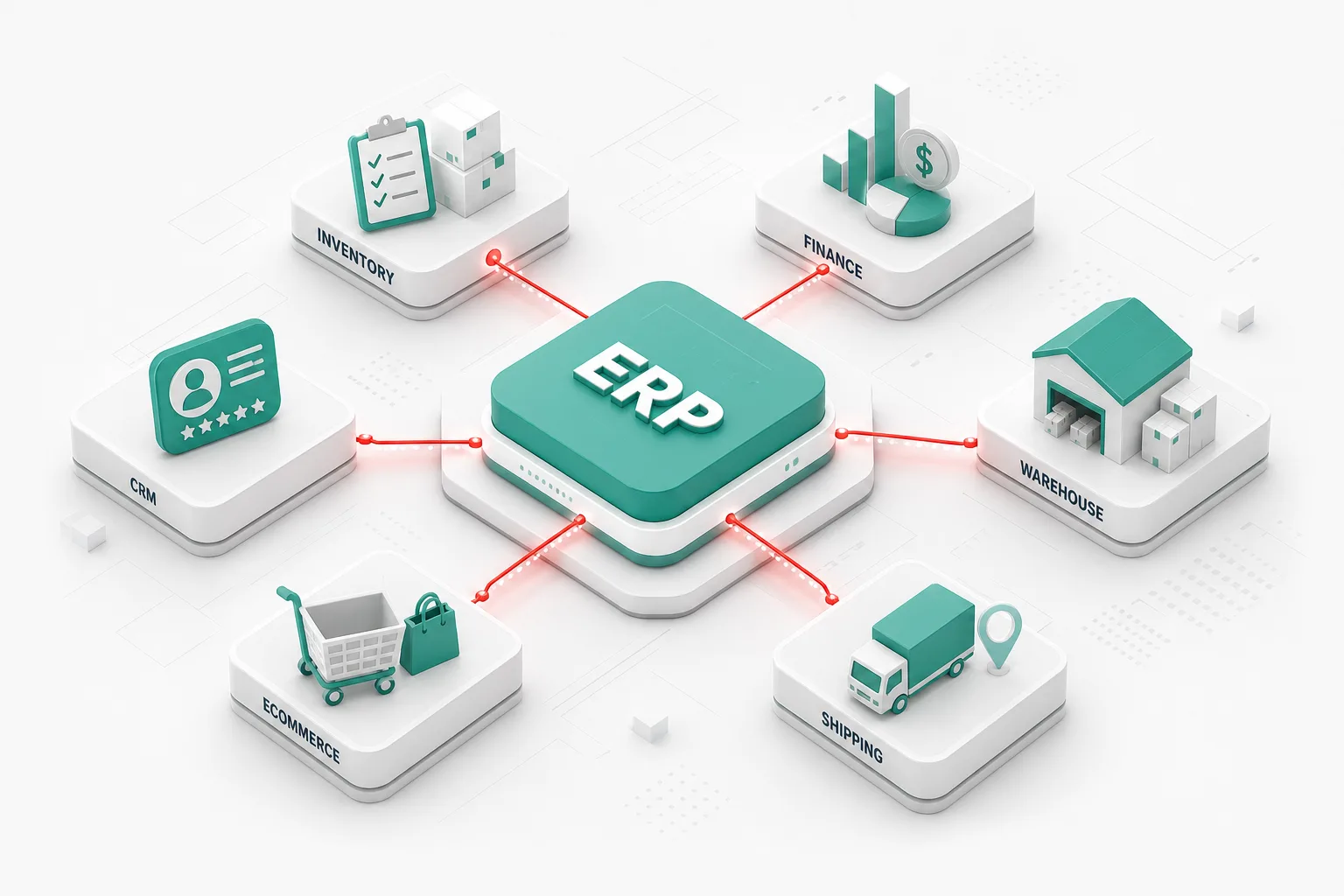
Most organizations use multiple systems, including:
- CRM software
- ERP platforms
- Accounting software
- Marketing automation tools
- Payment gateways
- Inventory systems
- Mobile applications
- eCommerce platforms
- Customer support software
API integration connects these systems so information flows automatically across the business. This foundation also supports AI integration with existing business systems, where intelligent features need reliable access to real operational data.
Benefits of API Integration
Eliminate Manual Data Entry
Manual data entry is slow and increases the risk of errors.
API integrations automatically synchronize information between systems, reducing repetitive work and improving accuracy.
Improve Operational Efficiency
Connected systems enable employees to spend less time switching between applications and more time on valuable work.
Automation also reduces delays in everyday business processes.
Better Customer Experience
Customers expect real-time information.
API integrations help businesses provide:
- Live order tracking
- Instant payment confirmation
- Accurate inventory availability
- Faster customer support
- Personalized experiences
Real-Time Data Synchronization
Information is updated automatically across connected platforms.
This helps ensure every department works with the latest data.
Scalability
As your business grows, API integrations allow you to add new applications and services without redesigning your entire technology stack.
Common Types of API Integrations
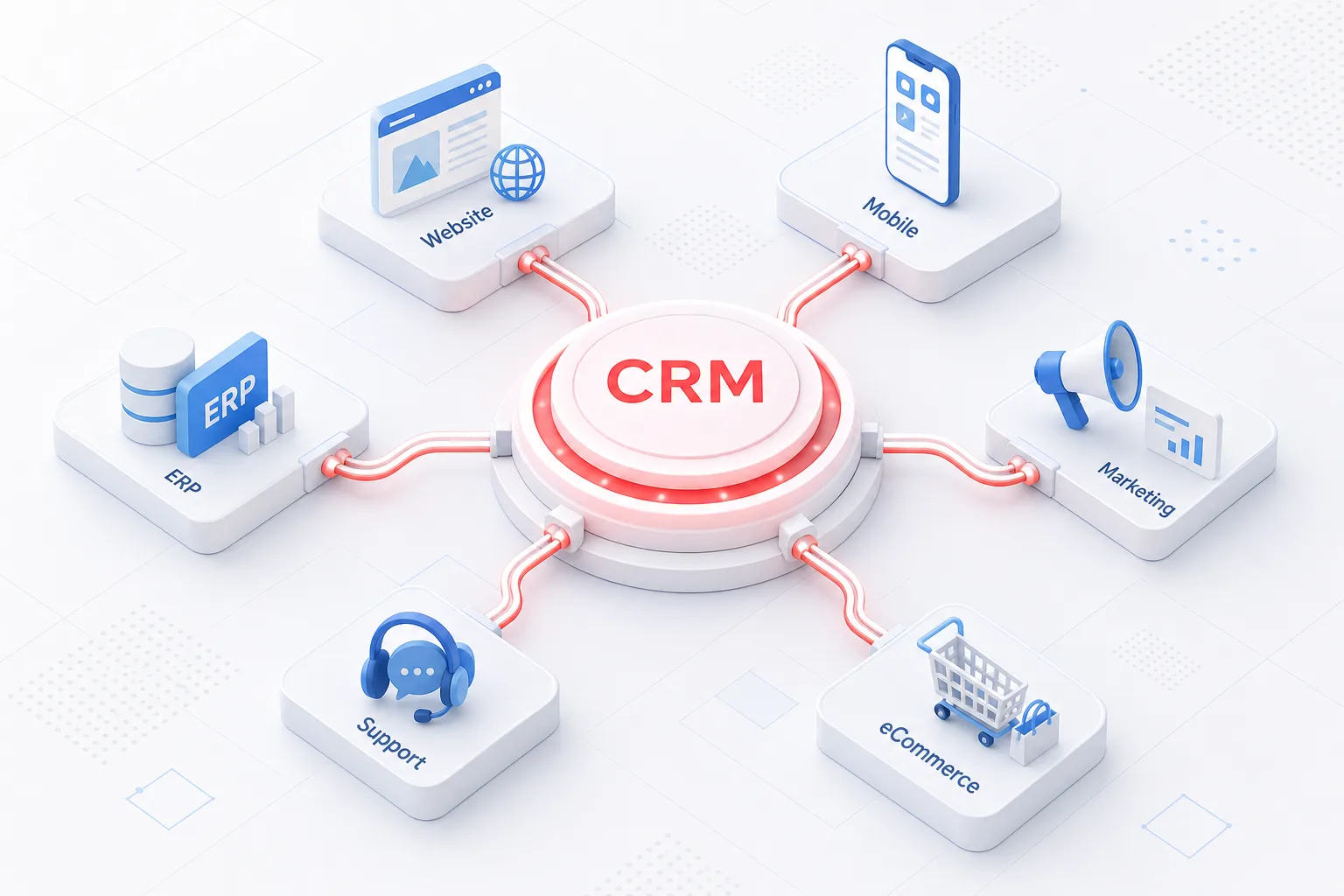
CRM Integration
Businesses integrate CRM platforms with:
- Websites
- Mobile apps
- Marketing platforms
- Customer support systems
- ERP software
Benefits include centralized customer information and automated sales workflows.
ERP Integration
ERP integrations connect finance, operations, inventory, and production systems.
Examples include:
- Purchase orders
- Inventory updates
- Manufacturing workflows
- Financial reporting
eCommerce Integration
Online stores often integrate with:
- Payment gateways
- Shipping providers
- Inventory management
- CRM software
- Accounting platforms
- Marketing automation
These integrations help automate order processing and improve customer experiences. For store-specific builds, see our WooCommerce development capabilities and WooCommerce API Integration for Mobile Apps.
Payment Gateway Integration
Secure payment APIs allow businesses to accept online payments while automating transaction processing and reporting.
Mobile App Integration
Mobile applications frequently connect with backend systems through APIs.
Examples include:
- User authentication
- Product catalogs
- Notifications
- Customer accounts
- Analytics
- Booking systems
Reliable APIs are essential for mobile app development and for scaling products into full SaaS platforms.
AI Integration
Modern AI solutions rely heavily on APIs.
Businesses integrate AI with:
- Customer support
- CRM systems
- Internal knowledge bases
- Document management
- Workflow automation
This enables AI to access real business data and perform meaningful tasks. Learn more in our guide on AI integration and explore AI development services.
API Integration Examples
Businesses commonly integrate:
- CRM with ERP
- WooCommerce with accounting software
- Mobile apps with backend systems
- Websites with payment gateways
- AI chatbots with customer databases
- Inventory systems with online stores
- Marketing platforms with CRM software
Each integration reduces manual work and improves business efficiency.
API Integration Process
A successful integration project follows a structured process.
Discovery
Understand business objectives and identify systems that need to communicate.
Requirements Analysis
Define the data that will be exchanged and the workflows that will be automated.
API Evaluation
Review available APIs, authentication methods, rate limits, and documentation.
Development
Build secure integration services and data mappings. This often involves custom software development when off-the-shelf connectors are not enough.
Testing
Validate data accuracy, security, performance, and error handling.
Deployment
Launch the integration and monitor its performance.
Ongoing Support
Maintain compatibility as APIs and business systems evolve.
Common API Integration Challenges
Businesses often face challenges such as:
- Legacy software
- Inconsistent data formats
- Authentication issues
- API rate limits
- Poor documentation
- Security requirements
- Data synchronization conflicts
Experienced developers can design integrations that minimize these risks.
API Security Best Practices
Secure API development is essential.
Best practices include:
- OAuth authentication
- API keys
- Access tokens
- HTTPS encryption
- Rate limiting
- Role-based access
- Logging and monitoring
- Input validation
Security should be built into every integration project.
How Kodu Media Delivers API Integration Services
At Kodu Media, we help businesses connect their software ecosystem through secure, scalable API integrations.
Our services include:
- API consulting
- Custom API development
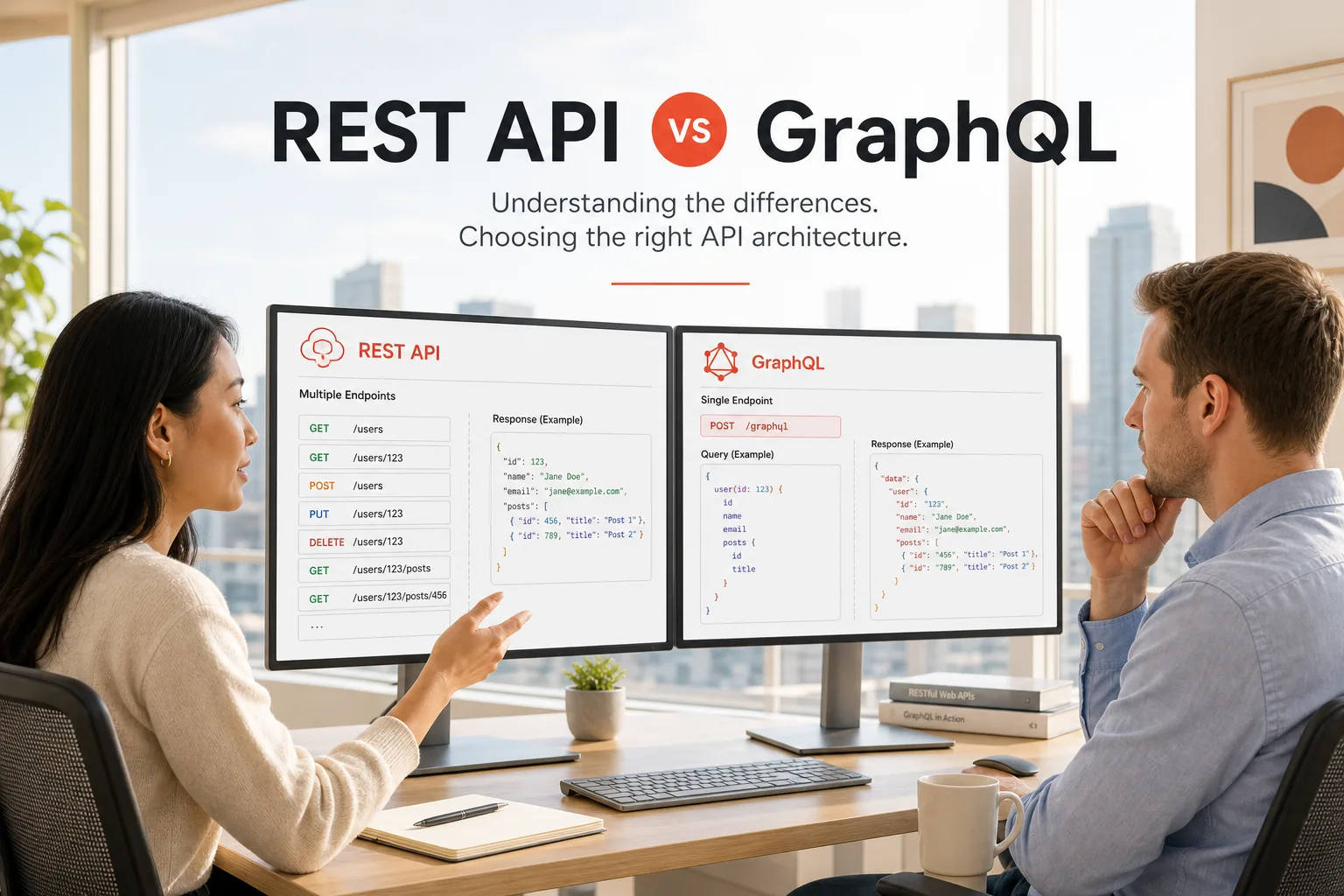
- REST API integration
- Third-party API integration
- CRM integration
- ERP integration
- WooCommerce integration
- Mobile app integration
- AI integration
- Ongoing maintenance and support
Every integration is designed to improve operational efficiency, automate workflows, and support long-term business growth.
Our API development and integration team works across custom software, AI development, SaaS development, mobile apps, and WooCommerce projects so integrations support the full product and operations stack.
Final Thoughts
API integration is one of the most effective ways to improve productivity, eliminate manual processes, and create a connected technology ecosystem.
Whether you're integrating CRM software, ERP systems, AI platforms, mobile applications, or eCommerce solutions, well-designed APIs help your business operate more efficiently while providing better customer experiences.
If you're planning an integration project, Kodu Media can help you design, develop, and maintain secure API solutions tailored to your business requirements.
Contact us today to discuss your API integration needs.
Frequently Asked Questions
What is API integration?
API integration is the process of connecting two or more software applications so they can securely exchange data and automate workflows.
Why does my business need API integration?
API integration reduces manual work, improves data accuracy, automates business processes, and enables different software systems to work together.
Can you integrate existing software?
Yes. Most modern CRM, ERP, accounting, eCommerce, marketing, and business platforms provide APIs that can be integrated with custom applications.
Is API integration secure?
Yes. Secure API integrations use encryption, authentication, authorization, and monitoring to protect business and customer data.
Does Kodu Media provide custom API integration services?
Yes. We design, develop, test, deploy, and maintain custom API integrations for businesses across multiple industries.