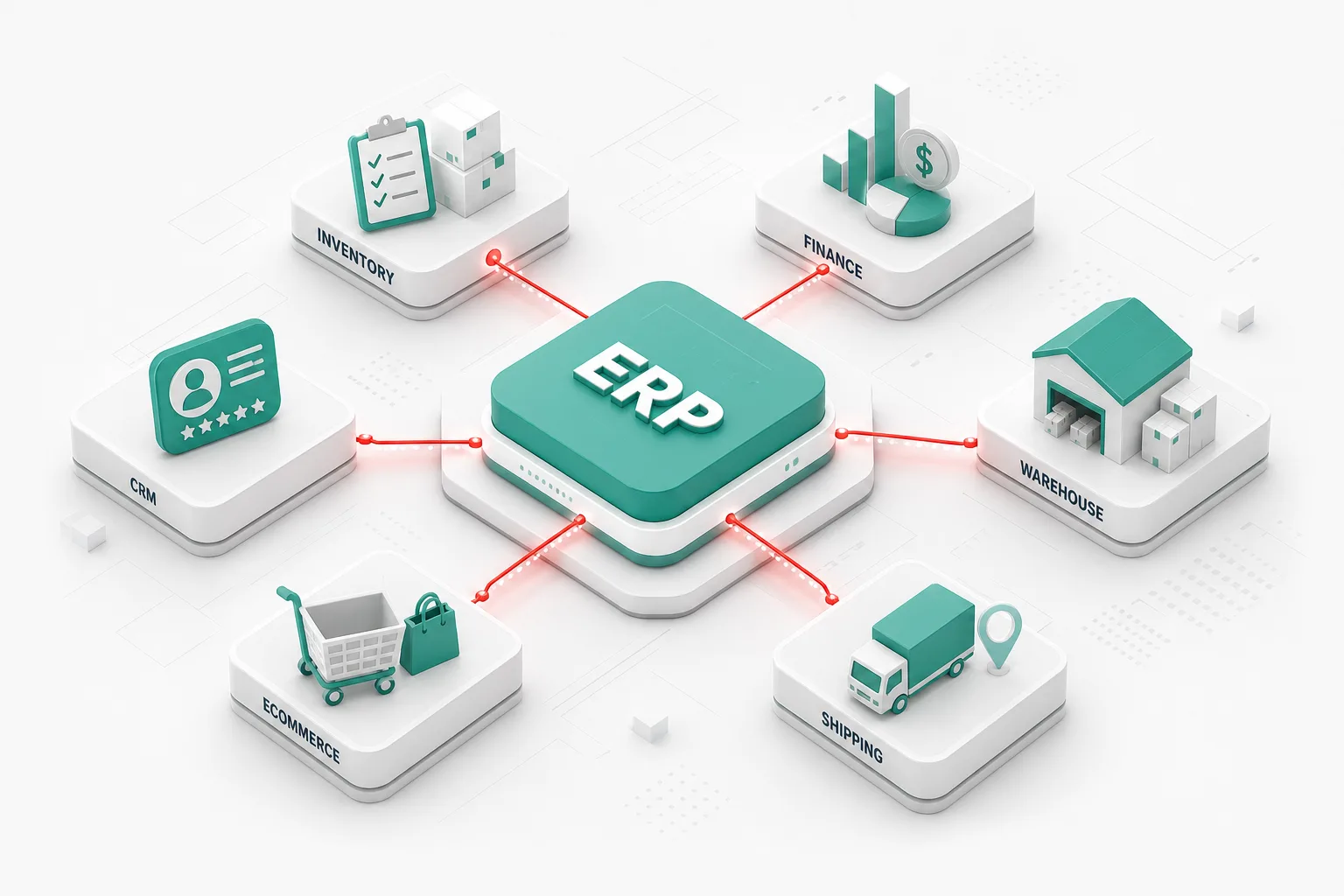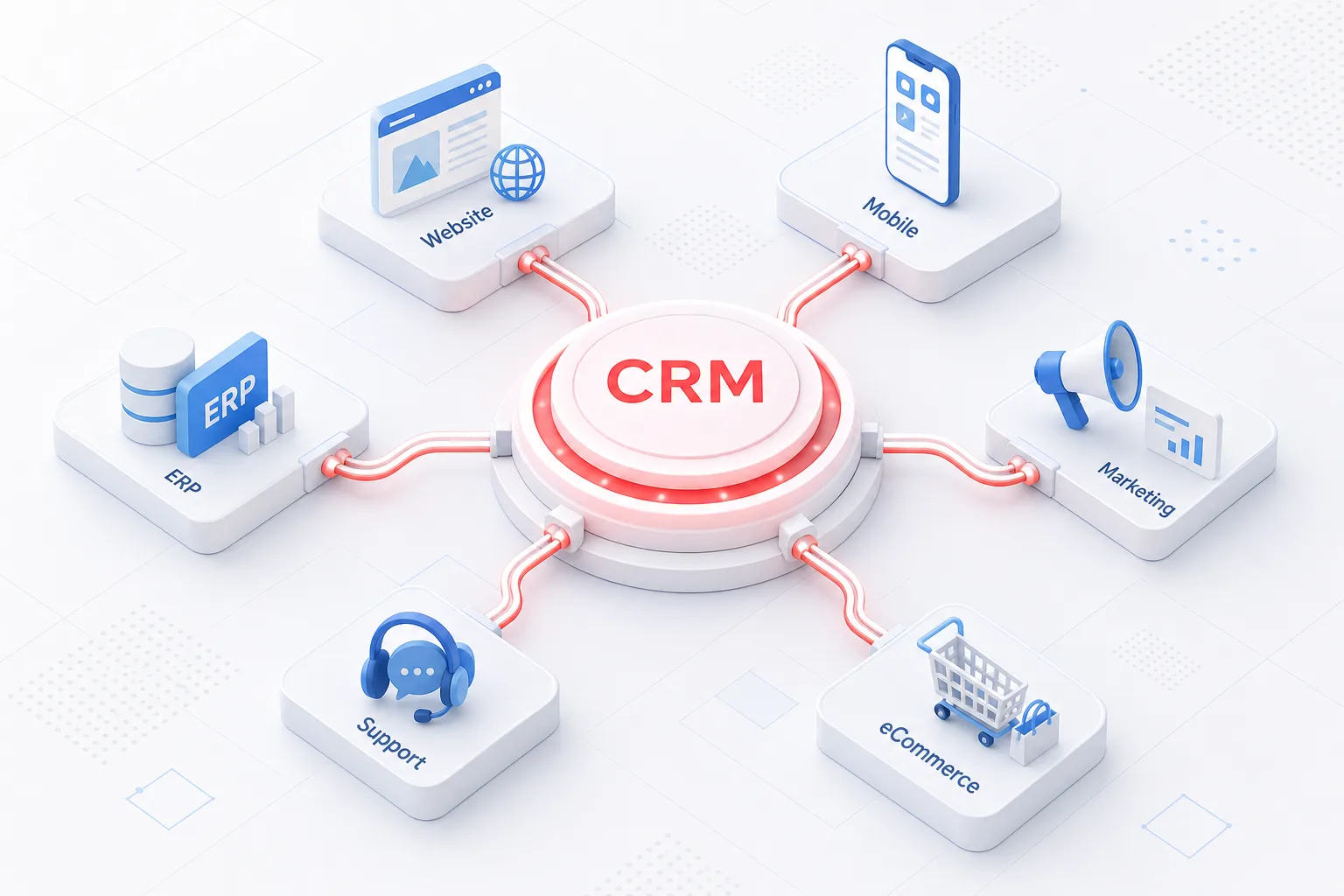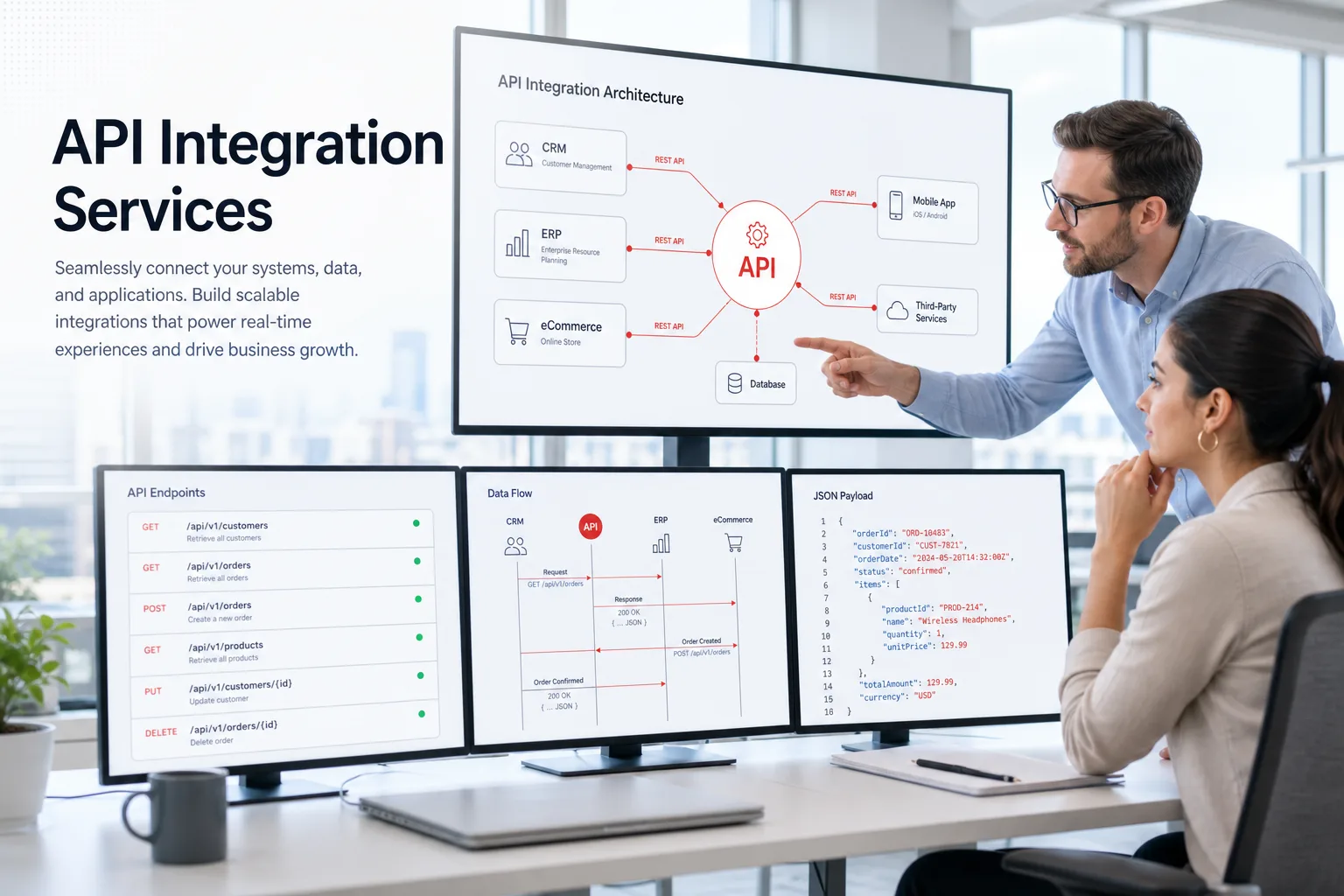
APIs are the foundation of modern software development. They allow websites, mobile applications, cloud platforms, and business systems to communicate and exchange information securely.
When building a new application, one of the most important architectural decisions is choosing between REST APIs and GraphQL.
Both approaches are widely used, but they solve different problems and offer different advantages. Choosing the right architecture can improve performance, simplify development, reduce maintenance, and create a better experience for users.
In this guide, we'll compare REST and GraphQL, explain their strengths and limitations, and help you determine which approach best fits your business requirements.
If you're new to integration strategy, start with our overview of API integration services.
What Is a REST API?
REST, or Representational State Transfer, is the most widely adopted architecture for web APIs.
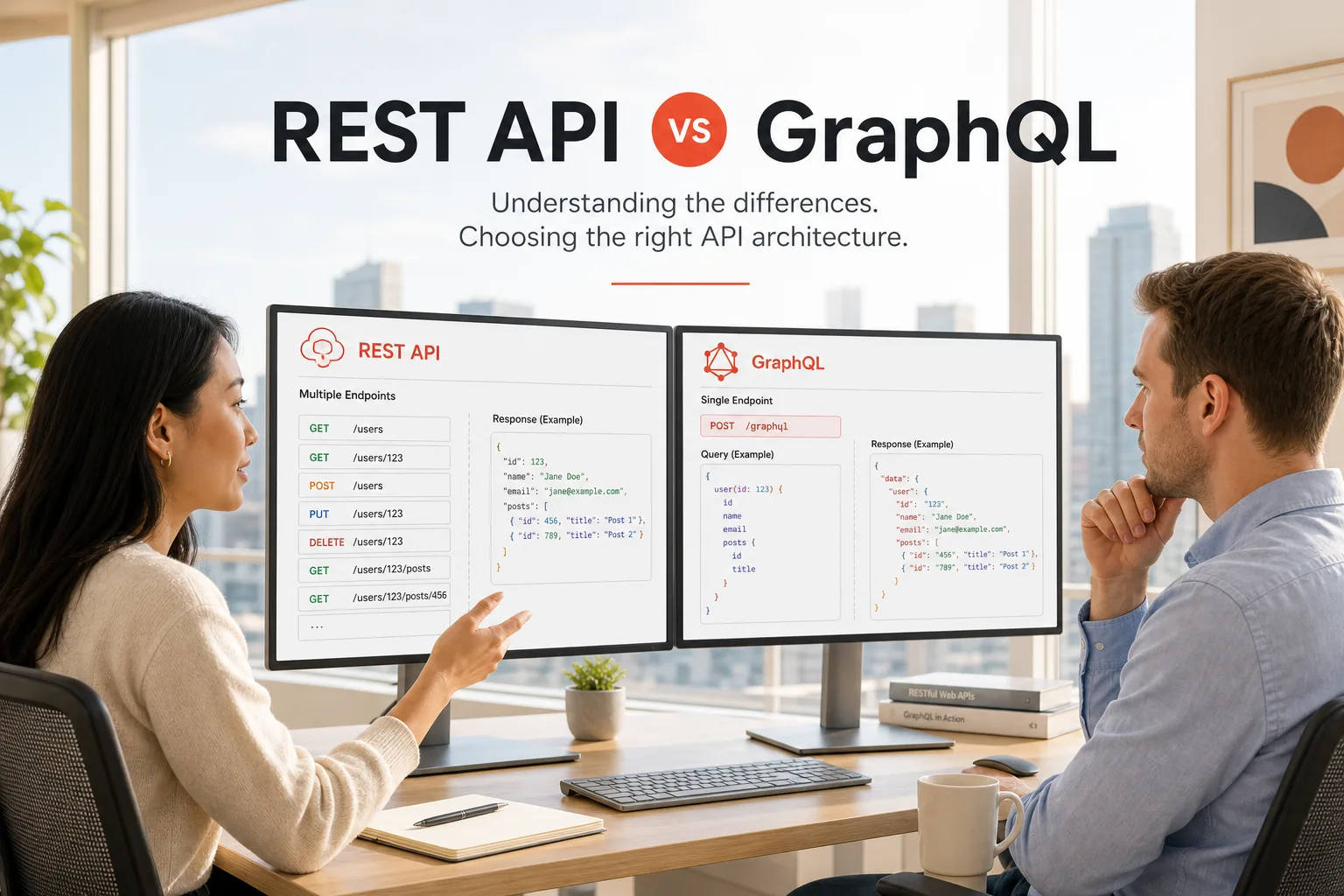
A REST API exposes resources through different endpoints.
Examples include:
/customers/products/orders/payments
Each endpoint returns a predefined set of data based on the request.
REST is simple, predictable, and supported by virtually every programming language and development framework.
What Is GraphQL?
GraphQL is a query language and API runtime originally developed to allow clients to request exactly the data they need.
Instead of multiple endpoints, GraphQL typically provides a single endpoint.
Applications specify which fields they want, and the server returns only those fields.
This gives developers greater flexibility and can reduce unnecessary data transfer.
REST vs GraphQL at a Glance
| Feature | REST API | GraphQL |
|---|---|---|
| Endpoints | Multiple | Usually one |
| Data Retrieval | Fixed responses | Client chooses fields |
| Performance | Excellent | Excellent for complex queries |
| Flexibility | Moderate | High |
| Caching | Simple | More complex |
| Learning Curve | Easier | Moderate |
| Best For | Standard business applications | Data-rich applications |
How REST APIs Work
REST organizes data into resources.
For example, a mobile app may request:
- Customer information
- Product details
- Order history
Each request typically calls a separate endpoint.
REST follows standard HTTP methods such as:
- GET
- POST
- PUT
- PATCH
- DELETE
This makes REST easy to understand and implement.
How GraphQL Works
GraphQL allows the client to define exactly what information should be returned.
For example, instead of requesting an entire customer record, an application can ask only for:
- Name
- Recent orders
This reduces unnecessary data transfer and gives frontend developers greater control.
Advantages of REST APIs
REST remains the preferred architecture for many business applications.
Benefits include:
- Simple implementation
- Mature ecosystem
- Broad framework support
- Easy caching
- Strong security practices
- Predictable architecture
- Excellent documentation tools
REST works particularly well for traditional web applications, mobile apps, and business systems. It is often the default choice for API development and integration projects involving CRM, ERP, and payment systems.
Advantages of GraphQL
GraphQL provides greater flexibility when applications require complex data.
Benefits include:
- Request only required data
- Reduce network requests
- Faster frontend development
- Better support for multiple client applications
- Flexible data structures
- Efficient handling of connected data
These advantages are valuable for applications with complex user interfaces, including many SaaS platforms and interactive dashboards.
REST API Limitations
REST may present challenges when:
- Multiple endpoints are required
- Applications request more data than necessary
- Frontend teams need greater flexibility
- Mobile applications have limited bandwidth
These situations can increase development effort.
GraphQL Limitations
GraphQL also has trade-offs.
Common challenges include:
- More complex implementation
- Additional security considerations
- Caching complexity
- Greater learning curve
- Increased backend planning
GraphQL often requires experienced developers and thoughtful architecture.
Which Businesses Should Choose REST?
REST is often the best choice for:
- Business websites
- CRM integrations
- ERP integrations
- eCommerce platforms
- SaaS applications
- Mobile applications
- Payment integrations
- Public APIs
Its simplicity and reliability make it suitable for most business software, including WooCommerce and custom software projects.
Which Businesses Should Choose GraphQL?
GraphQL is a strong option when applications require:
- Complex dashboards
- Real-time applications
- Multiple frontend clients
- Highly interactive user interfaces
- Large datasets
- Flexible reporting
- Personalized experiences
It is particularly useful when frontend teams need complete control over the data they receive.
REST vs GraphQL for Mobile Apps
Mobile applications often benefit from efficient data transfer.
REST works well for many standard mobile applications.
GraphQL can improve efficiency when:
- Multiple screens require different datasets
- Network performance is important
- Data usage should be minimized
- Complex relationships exist between data
The best choice depends on the application's architecture and business requirements. Our mobile app development team helps clients select the API style that best supports product performance and delivery timelines.
REST vs GraphQL for AI Applications
Modern AI platforms frequently use APIs.
REST is commonly used for:
- AI model requests
- Chatbot integrations
- Business automation
- Third-party AI services
GraphQL may be useful when AI applications require flexible access to large knowledge bases or multiple connected data sources.
For more on connecting AI to business systems, see AI integration and our AI development services.
Security Considerations
Regardless of architecture, APIs should implement:
- Authentication
- Authorization
- HTTPS encryption
- Rate limiting
- Input validation
- Monitoring
- Logging
Security should be considered from the beginning of every API project.
Choosing the Right API Architecture
When making your decision, consider:
- Business goals
- Application complexity
- Development timeline
- Team expertise
- Integration requirements
- Scalability
- Maintenance
There is no universal winner. The right architecture depends on your specific project.
How Kodu Media Helps Businesses Build APIs
At Kodu Media, we design and develop secure, scalable API solutions based on your business requirements.
Our services include:
- REST API development
- GraphQL development
- API architecture consulting
- Third-party API integration
- Custom API development
- AI API integration
- Mobile application APIs
- SaaS platform APIs
- API testing
- Ongoing maintenance and support
We recommend the technology that best aligns with your business objectives rather than applying the same solution to every project.
Our API development and integration team works across custom software, SaaS, mobile apps, and AI development so your architecture supports both current needs and future growth.
Final Thoughts
REST and GraphQL are both excellent technologies that support modern digital applications.
REST remains the preferred choice for many business systems because of its simplicity, maturity, and broad adoption. GraphQL offers greater flexibility for applications that require complex data interactions and customized responses.
The best architecture depends on your application's requirements, expected growth, and long-term technology strategy.
If you're planning a new software project or modernizing an existing platform, Kodu Media can help you design the right API architecture and build scalable integrations that support your business for years to come.
Contact us today for a free consultation.
Frequently Asked Questions
Is GraphQL better than REST?
Not necessarily. GraphQL provides greater flexibility, while REST offers simplicity, stability, and broad compatibility. The best choice depends on your project requirements.
Is REST still relevant?
Yes. REST remains the most widely used API architecture for web applications, mobile apps, SaaS products, and enterprise integrations.
Which architecture is better for mobile applications?
Both can work well. REST is suitable for many applications, while GraphQL is often beneficial for data-intensive mobile experiences.
Can REST and GraphQL be used together?
Yes. Many organizations use REST for existing services while introducing GraphQL for new applications or frontend experiences.
Does Kodu Media develop both REST and GraphQL APIs?
Yes. We design, develop, integrate, and maintain REST and GraphQL APIs based on each client's technical and business requirements.