Enterprise Resource Planning (ERP) systems are the backbone of many growing businesses. They centralize critical operations such as finance, inventory, procurement, manufacturing, sales, and human resources into a single platform.
However, an ERP system delivers its greatest value when it is connected with the rest of your business applications. Integrating your ERP with CRM software, eCommerce platforms, mobile applications, accounting systems, customer support tools, and third-party services enables information to flow seamlessly across the organization.
Instead of relying on manual data entry and disconnected processes, businesses can automate operations, improve decision-making, and provide better customer experiences.
In this guide, we'll explain ERP integration, its business benefits, common use cases, implementation methods, challenges, and best practices.
For the customer-side companion guide, see CRM integration: benefits, challenges, and best practices. For the broader integration foundation, start with API integration services.
What Is ERP Integration?
ERP integration is the process of connecting an ERP platform with other software applications so they can exchange data automatically.
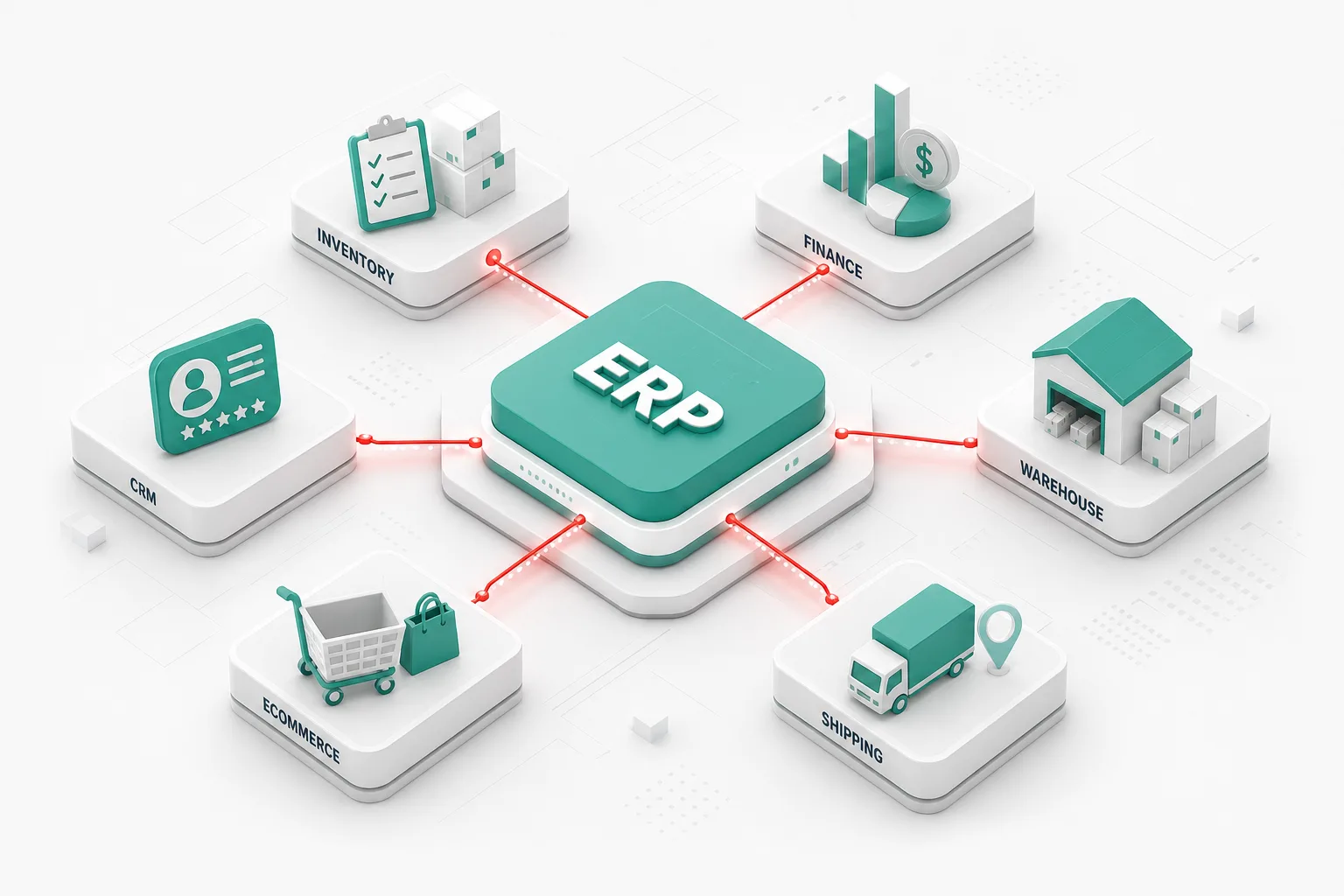
An integrated ERP acts as the central source of operational information while allowing other systems to access and update relevant data securely.
Common ERP integrations include:
- CRM platforms
- eCommerce websites
- Mobile applications
- Accounting software
- Warehouse management systems
- Shipping providers
- Payment gateways
- Business intelligence tools
- AI applications
This creates a connected ecosystem where departments work with accurate, real-time information.
Why ERP Integration Matters
Without integration, departments often work in separate systems that don't communicate effectively.
This can result in:
- Duplicate data entry
- Inventory discrepancies
- Delayed order processing
- Reporting inconsistencies
- Manual reconciliation
- Slower customer service
ERP integration eliminates these silos and improves operational visibility.
Benefits of ERP Integration
Centralized Business Data
ERP integration ensures that departments access consistent and up-to-date information.
This improves collaboration between finance, operations, sales, customer support, and management.
Automated Business Processes
Integrated systems can automatically perform tasks such as:
- Creating invoices
- Updating inventory
- Processing purchase orders
- Synchronizing customer records
- Tracking shipments
- Managing supplier information
Automation reduces manual effort and improves efficiency.
Improved Inventory Management
Connecting your ERP with inventory and sales systems provides real-time stock visibility.
Businesses can:
- Prevent stock shortages
- Reduce overstocking
- Improve demand planning
- Streamline warehouse operations
Better Financial Accuracy
Finance teams benefit from automated synchronization of:
- Orders
- Payments
- Expenses
- Invoices
- Tax information
This reduces errors and speeds up financial reporting.
Enhanced Customer Experience
Integrated ERP systems help businesses provide:
- Accurate order updates
- Faster fulfillment
- Better support
- Reliable delivery information
- Personalized service
Customers receive consistent information across every touchpoint.
Common ERP Integrations
CRM Integration
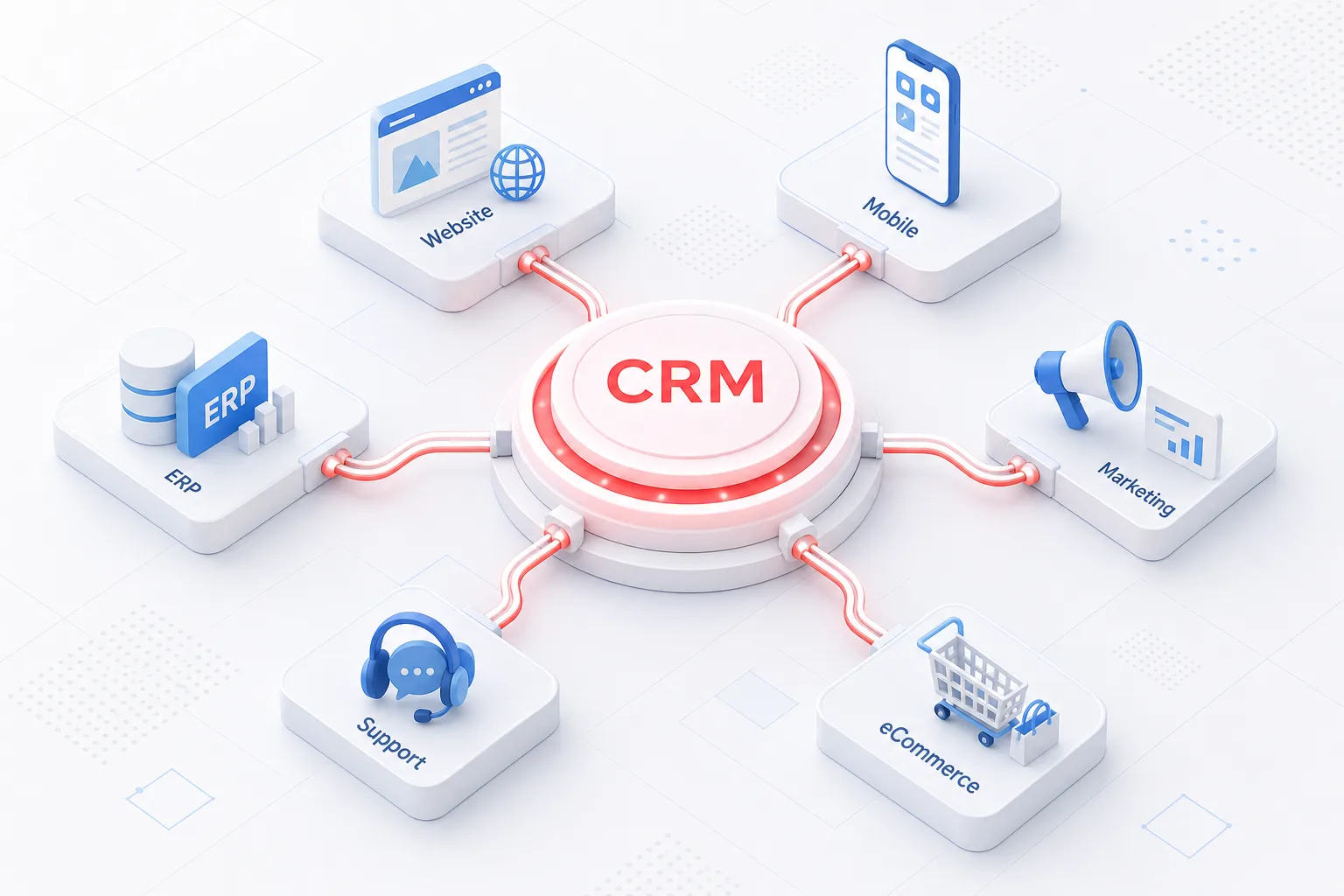
Connecting CRM and ERP allows sales and operations teams to share customer, order, and financial data.
Benefits include:
- Improved lead management
- Better sales forecasting
- Faster order processing
- Unified customer information
Learn more in our CRM integration guide.
eCommerce Integration
Online stores can synchronize:
- Products
- Inventory
- Orders
- Pricing
- Customer information
- Shipping status
This reduces manual administration and improves order accuracy. Our WooCommerce development team often pairs store builds with ERP inventory and order sync.
Accounting Software Integration
ERP integration with accounting systems automates financial processes, including:
- Invoice generation
- Payment reconciliation
- Expense tracking
- Financial reporting
Warehouse Management Integration
Warehouse systems can communicate directly with ERP platforms to update:
- Inventory levels
- Pick lists
- Shipment status
- Returns
- Stock movements
AI Integration
AI-powered ERP integrations support:
- Demand forecasting
- Predictive maintenance
- Procurement optimization
- Financial analysis
- Business reporting
- Intelligent workflow automation
These capabilities help organizations make faster, data-driven decisions. See AI integration with existing business systems for how AI connects to operational platforms.
ERP Integration Methods
Businesses typically integrate ERP systems using:
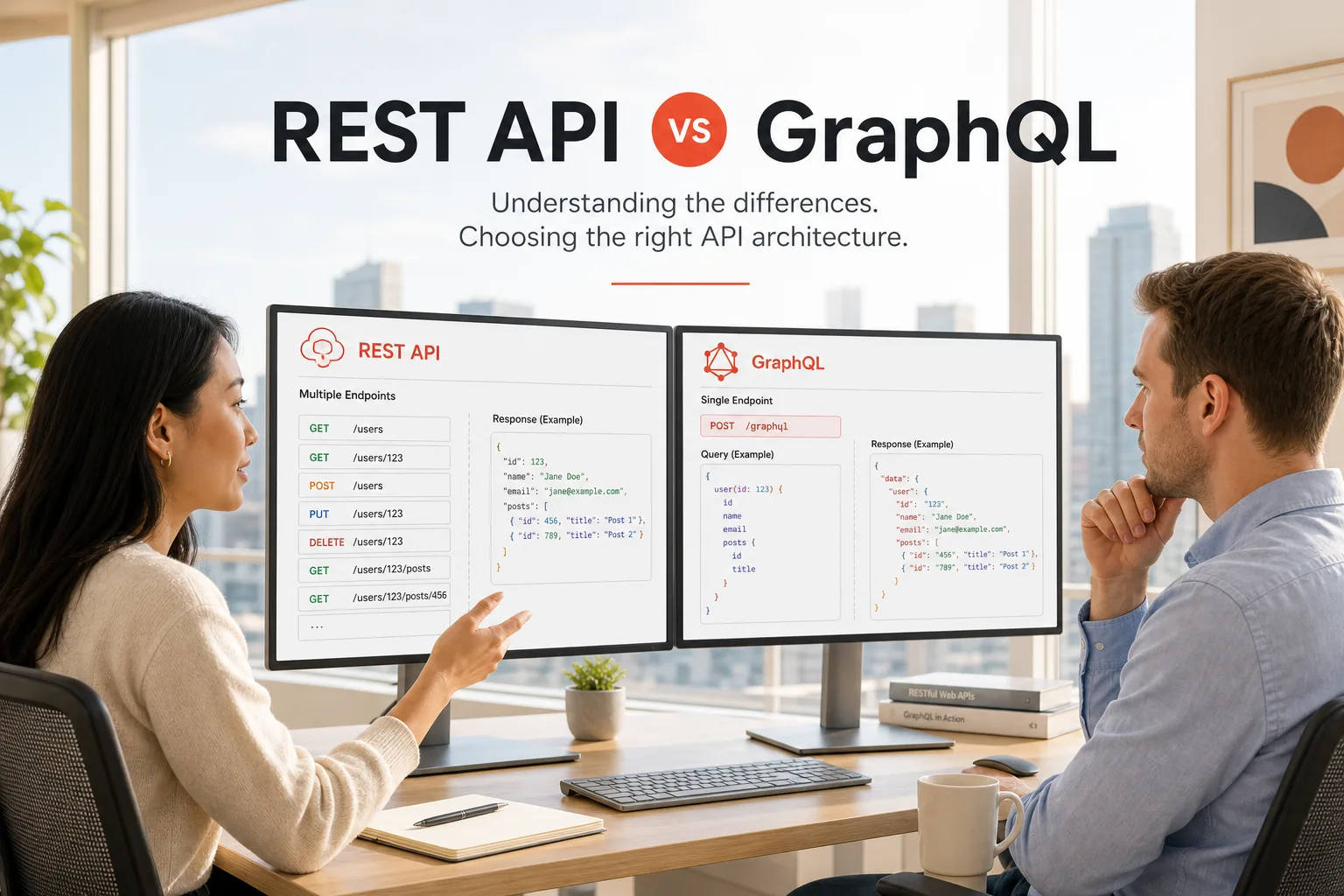
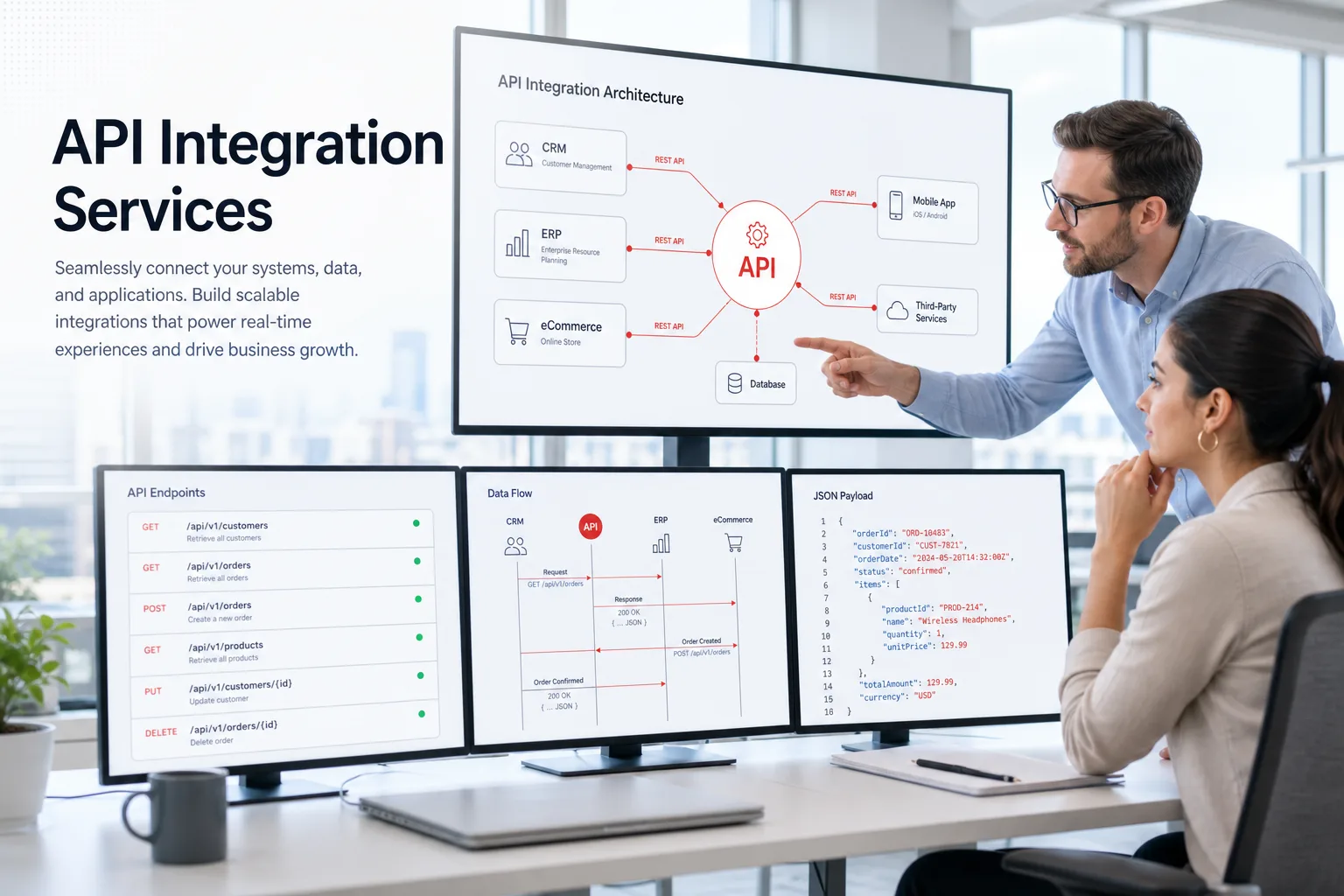
- REST APIs
- GraphQL APIs
- Webhooks
- Middleware platforms
- Enterprise integration platforms
- Custom API development
The right approach depends on your ERP software, existing applications, and business requirements. Compare architecture options in REST API vs GraphQL.
Challenges of ERP Integration
Businesses may encounter challenges such as:
- Legacy systems
- Data quality issues
- Complex business rules
- API limitations
- Security requirements
- User adoption
- Synchronization conflicts
Proper planning and experienced development teams help minimize these risks.
Best Practices for ERP Integration
Define Clear Objectives
Identify the business processes you want to improve before starting the project.
Clean Existing Data
Accurate and consistent data improves synchronization and reporting.
Use Secure APIs
Protect business information with authentication, encryption, and role-based access controls.
Test Thoroughly
Validate integrations across different scenarios before deployment.
Monitor Performance
Track synchronization accuracy, system performance, and workflow efficiency after launch.
Continuous monitoring helps identify improvement opportunities.
How Kodu Media Helps Businesses Integrate ERP Systems
Kodu Media develops secure, scalable ERP integrations tailored to your operational needs.
Our services include:
- ERP consulting
- Custom ERP integration
- API development
- CRM integration
- eCommerce integration
- AI integration
- Mobile app integration
- Workflow automation
- Cloud integration
- Ongoing support and optimization
We design integrations that reduce manual work, improve operational visibility, and support long-term business growth.
Our API development and integration team works with custom software, AI development, SaaS development, and mobile app development so ERP data powers every channel your business runs.
Final Thoughts
ERP integration enables businesses to connect critical systems, automate operations, and improve the flow of information across departments.
Whether you're integrating CRM software, eCommerce platforms, accounting systems, AI solutions, or mobile applications, a well-planned ERP integration can reduce costs, improve productivity, and support better business decisions.
If you're planning an ERP integration project, Kodu Media can help you design and implement secure, scalable solutions tailored to your organization.
Contact us today to discuss your ERP integration requirements.
Frequently Asked Questions
What is ERP integration?
ERP integration connects an ERP platform with other business applications so they can exchange data automatically and support business workflows.
Why is ERP integration important?
It eliminates data silos, automates manual processes, improves reporting, and provides real-time operational visibility.
Can ERP integrate with CRM and eCommerce platforms?
Yes. Modern ERP systems commonly integrate with CRM software, eCommerce websites, accounting tools, warehouse systems, and mobile applications through APIs.
Is ERP integration secure?
Yes. Secure ERP integrations use authentication, encryption, role-based access controls, and monitoring to protect sensitive business information.
Does Kodu Media provide custom ERP integration services?
Yes. We develop custom ERP integrations, APIs, workflow automation, AI integrations, and ongoing support for businesses across various industries.