Choosing the right development approach is one of the most important decisions you'll make when building a mobile app.
Many businesses ask whether they should build a native app for Android and iOS separately or use a cross-platform framework that supports both platforms from a single codebase.
There is no universal answer. The best choice depends on your budget, timeline, target audience, feature requirements, long-term growth plans, and business objectives.
In this guide, we'll explain the differences between native and cross-platform development, compare their advantages and limitations, and help you determine which option best fits your project.
What Is Native App Development?
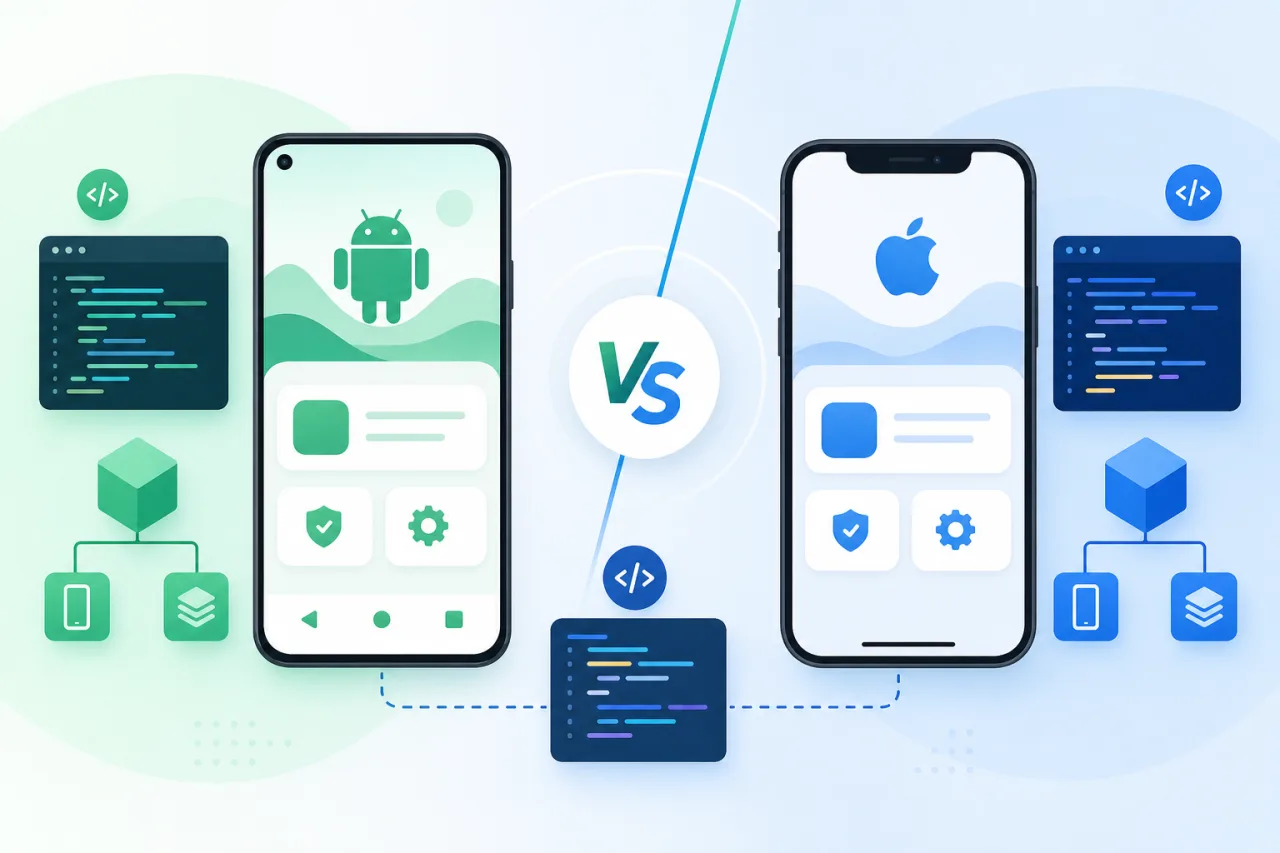
Native app development involves building separate applications for each operating system.
Typically this means:
- Kotlin or Java for Android
- Swift for iOS
Each application is developed specifically for its platform, allowing developers to take full advantage of platform-specific features and performance.
Native development is commonly used for applications that require advanced functionality, high performance, or deep integration with device hardware.
What Is Cross-Platform App Development?
Cross-platform development allows developers to build a single application that runs on both Android and iOS.
Popular frameworks include:
- Flutter
- React Native
Instead of maintaining two separate codebases, developers share much of the application code while still delivering a native-like experience.
Cross-platform development has become increasingly popular because it reduces development time and simplifies ongoing maintenance.
Native vs Cross-Platform: Quick Comparison
| Feature | Native Development | Cross-Platform Development |
|---|---|---|
| Codebase | Separate for Android and iOS | Shared across platforms |
| Development Time | Longer | Faster |
| Initial Cost | Higher | Lower |
| Performance | Excellent | Very Good to Excellent |
| User Experience | Platform-specific | Consistent across platforms |
| Maintenance | Separate updates | Single codebase |
| Device Features | Full access | Extensive access with some limitations |
| Best For | Complex apps | Business applications and startups |
If budget is a primary concern, our guide on how much mobile app development costs in 2026 breaks down typical investment ranges for MVP, business, and enterprise applications.
Development Cost
Development cost is often one of the biggest deciding factors.
Native Development
Native apps require separate development for Android and iOS.
This generally means:
- More development hours
- Separate testing
- Independent maintenance
- Larger development teams
As a result, native development usually involves a higher upfront investment.
Cross-Platform Development
Cross-platform frameworks allow developers to reuse much of the same code.
Benefits include:
- Faster development
- Lower development costs
- Reduced maintenance expenses
- Simultaneous releases
For businesses working within a limited budget, cross-platform development often provides better value.
Performance
Performance affects how responsive and reliable your application feels.
Native Apps
Native applications communicate directly with the operating system.
Advantages include:
- Faster animations
- Better responsiveness
- Lower memory usage
- Optimized battery performance
- Excellent handling of graphics-intensive applications
This makes native development ideal for gaming, augmented reality, and applications requiring advanced processing.
Cross-Platform Apps
Modern frameworks such as Flutter deliver impressive performance.
Most business applications, eCommerce apps, booking systems, healthcare portals, and customer portals perform exceptionally well using cross-platform technologies.
For many companies, users are unlikely to notice any significant performance difference.
User Experience
User experience plays a major role in customer satisfaction.
Native Development
Native apps follow each platform's design standards.
Benefits include:
- Familiar navigation
- Platform-specific interactions
- Better accessibility
- Optimized user experience
Cross-Platform Development
Cross-platform apps provide a consistent experience across Android and iOS.
This consistency helps strengthen brand identity while reducing design and development effort.
Access to Device Features
Many applications rely on smartphone hardware.
Examples include:
- Camera
- GPS
- Bluetooth
- Biometrics
- NFC
- Push notifications
- Contacts
- Calendar
- File storage
Native development provides immediate access to all platform capabilities.
Cross-platform frameworks support most common device features through built-in libraries and plugins, making them suitable for the majority of business applications.
Maintenance
Every mobile application requires ongoing updates.
Native
Separate Android and iOS applications require:
- Independent testing
- Separate bug fixes
- Individual feature updates
This increases long-term maintenance effort.
Cross-Platform
A shared codebase allows developers to:
- Release updates faster
- Fix issues once
- Maintain feature consistency
- Reduce ongoing costs
For businesses planning continuous improvements, cross-platform maintenance is often more efficient.
Scalability
Both approaches can scale successfully.
Native development may be preferred for:
- High-performance enterprise applications
- Complex financial platforms
- Large-scale gaming
- AR and VR applications
Cross-platform development scales well for:
- Customer apps
- Retail applications
- Healthcare solutions
- Business portals
- Booking platforms
- Internal business applications
- SaaS companion apps
Choosing the right architecture from the beginning is often more important than the framework itself.
When Native Development Is the Right Choice
Native development is usually the best option if your project requires:
- Maximum performance
- Graphics-intensive functionality
- Advanced animations
- Complex hardware integration
- Platform-specific capabilities
- High-security enterprise environments
Examples include:
- Mobile games
- Video editing applications
- Banking platforms
- Augmented reality apps
- Medical imaging applications
When Cross-Platform Development Is the Better Choice
Cross-platform development is often the best solution for businesses that want to:
- Launch faster
- Reduce development costs
- Reach Android and iOS users simultaneously
- Maintain one codebase
- Simplify updates
- Build scalable business applications
Examples include:
- eCommerce apps
- Food delivery apps
- Healthcare portals
- Educational platforms
- CRM applications
- Customer loyalty apps
- Service booking apps
Common Misconceptions
Cross-Platform Apps Are Slow
This was more accurate several years ago.
Modern frameworks such as Flutter provide excellent performance for most business applications.
Native Is Always Better
Native development offers advantages for certain use cases, but many businesses can achieve their goals with cross-platform technology while reducing development costs and time.
Cross-Platform Limits Growth
A well-designed cross-platform application can scale to support millions of users when built with the right architecture and backend infrastructure.
How Kodu Media Helps Businesses Choose
At Kodu Media, we don't recommend one technology for every project.
Instead, we evaluate:
- Business goals
- Target audience
- Budget
- Timeline
- Required features
- Future scalability
- Integration requirements
Based on these factors, we recommend the development approach that delivers the best long-term value.
Our mobile app development services include:
- Android development
- iOS development
- Flutter development
- React Native development
- UI and UX design
- API integration
- Cloud backend development
- Quality assurance
- App Store and Google Play deployment
- Ongoing maintenance and support
Final Thoughts
Choosing between native and cross-platform development is not about finding the universally "best" option. It is about selecting the approach that best supports your business goals.
For many startups and growing businesses, cross-platform development provides an excellent balance of speed, cost, and functionality.
For applications with demanding performance requirements or advanced platform-specific features, native development may be the better investment.
An experienced development partner can help you evaluate your options and build an application that supports both your current needs and future growth.
If you're planning a mobile app, Kodu Media can help you choose the right technology stack and develop a scalable solution that delivers measurable business value.
Contact us today for a free consultation and discover the best approach for your next mobile app project.
Frequently Asked Questions
Which is cheaper, native or cross-platform app development?
Cross-platform development is generally more cost-effective because much of the code is shared across Android and iOS.
Which approach is faster?
Cross-platform development usually results in a shorter development timeline because developers work from a single codebase.
Is Flutter better than native development?
Flutter is an excellent choice for many business applications. Native development remains the preferred option for apps that require maximum performance or deep platform integration.
Can a cross-platform app perform like a native app?
For most business applications, users experience little to no noticeable difference. Modern frameworks provide performance that meets the needs of the majority of commercial apps.
Which option should I choose?
The answer depends on your business objectives, budget, target users, and feature requirements. Consulting with an experienced development team can help you make the right decision.