One of the first questions businesses ask before starting a mobile app project is, "How long will it take to build my app?"
The answer depends on several factors, including the app's complexity, features, supported platforms, design requirements, integrations, and testing. While every project is different, understanding the development process can help you plan your budget, launch strategy, and business goals more effectively.
In this guide, we'll explain the stages of mobile app development, what influences project timelines, and how businesses can avoid unnecessary delays.
Why There Is No Standard Timeline
Every mobile app is unique.
A simple appointment booking app requires far less development than a marketplace platform, healthcare application, or enterprise solution with multiple integrations.
The overall timeline depends on:
- Number of features
- Platform selection
- UI and UX design
- Backend development
- API integrations
- Third-party services
- Security requirements
- Testing and quality assurance
- Client feedback and approvals
Understanding these variables helps set realistic expectations. For a full breakdown of each stage, see our mobile app development process guide.
Typical Mobile App Development Timeline
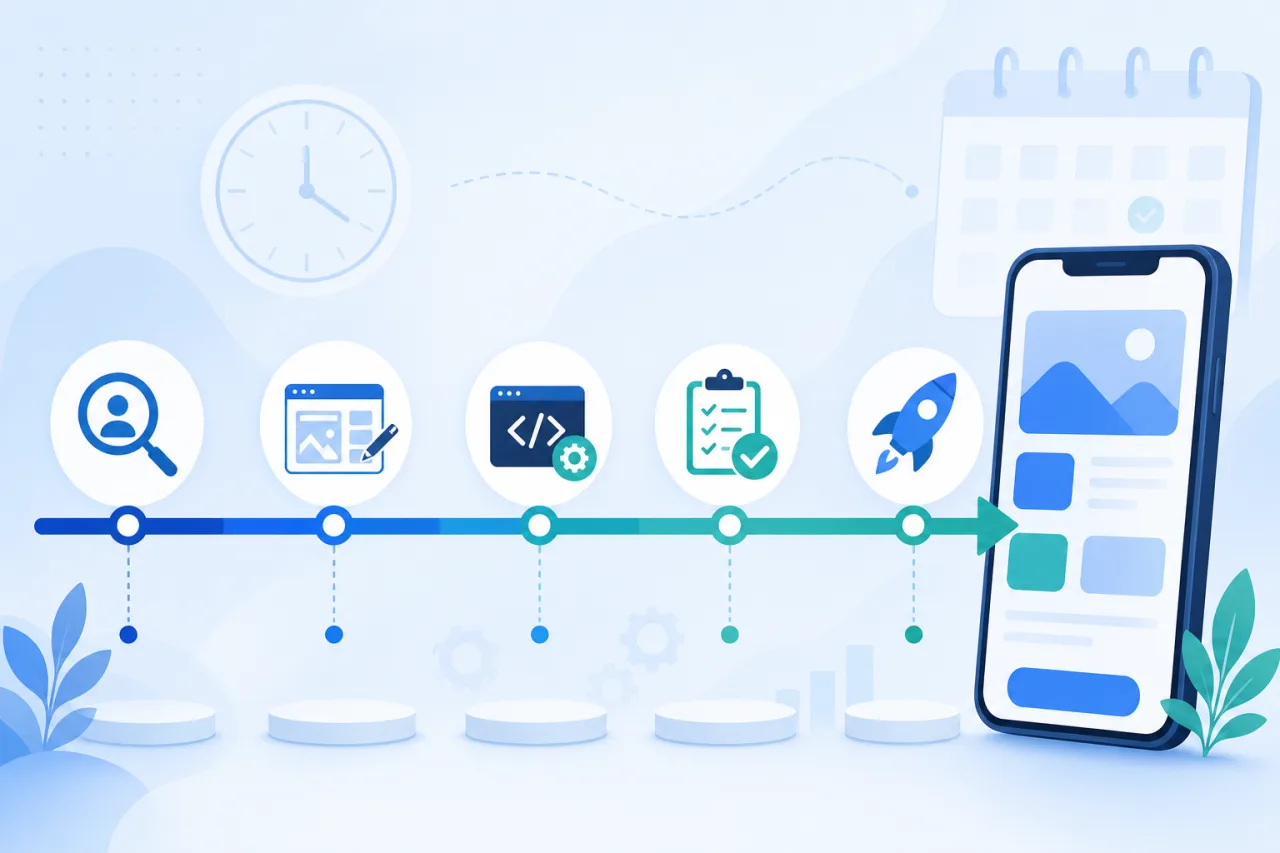
Although every project is different, most apps move through the following stages.
Step 1: Discovery and Planning
Estimated timeline: 1 to 3 weeks
This phase focuses on defining the project before development begins.
Activities include:
- Business analysis
- Goal definition
- Competitor research
- User research
- Feature planning
- Technical requirements
- Project roadmap
A well-planned project is less likely to experience delays later.
Step 2: UI and UX Design
Estimated timeline: 2 to 5 weeks
Designers create the visual experience and user journey.
This stage includes:
- Wireframes
- User flows
- Interactive prototypes
- High-fidelity designs
- Design revisions
Good design reduces user confusion and improves engagement after launch.
Step 3: Mobile App Development
Estimated timeline: 6 to 20 weeks
Development usually takes the largest portion of the project.
Typical tasks include:
- Frontend development
- Backend development
- Database setup
- API integration
- User authentication
- Push notifications
- Security implementation
The timeline varies depending on feature complexity and supported platforms.
Step 4: Testing and Quality Assurance
Estimated timeline: 2 to 4 weeks
Before release, the app is thoroughly tested.
Testing includes:
- Functional testing
- Device compatibility testing
- Performance testing
- Security testing
- Bug fixing
- User acceptance testing
Comprehensive testing helps reduce post-launch issues.
Step 5: App Store Submission and Launch
Estimated timeline: 1 to 2 weeks
Publishing includes:
- Store listing preparation
- Screenshot creation
- Privacy documentation
- Final reviews
- Store approval
Approval times vary depending on the platform and review requirements.
Timeline by App Complexity
| App Type | Examples | Typical Timeline |
|---|---|---|
| Simple Mobile Apps | Portfolio apps, restaurant apps, event apps, appointment booking apps | 2 to 4 months |
| Medium Complexity Apps | Fitness apps, educational platforms, customer loyalty apps, service marketplace apps | 4 to 7 months |
| Complex Applications | Healthcare systems, financial platforms, enterprise software, multi-vendor marketplaces, logistics solutions | 7 months or longer |
Large enterprise projects are often delivered in multiple phases. For help estimating investment alongside timeline, see how much mobile app development costs in 2026.
Factors That Can Affect Development Time
Number of Features
More functionality requires additional planning, development, and testing.
Examples include:
- User accounts
- Chat systems
- Payment gateways
- GPS tracking
- Video streaming
- File uploads
- AI features
Prioritizing essential features for the first release helps reduce development time. Our guide on 10 essential features every successful mobile app should have helps identify what to include in version one.
Platform Choice
Developing separate native apps for Android and iOS generally takes longer than building a cross-platform application with Flutter or React Native.
Cross-platform development often allows businesses to launch on both platforms faster. Compare approaches in our guides on native vs cross-platform app development and Android vs iOS: which platform to build first.
Third-Party Integrations
Connecting with external systems adds development time.
Common integrations include:
- Payment gateways
- CRM software
- ERP systems
- Maps
- Analytics
- Shipping providers
- Marketing automation platforms
Planning integrations early helps avoid delays.
Client Feedback
Development projects rely on collaboration.
Delays in reviewing designs, approving features, or providing content can extend the timeline.
Assigning a dedicated project stakeholder helps keep the project moving.
Scope Changes
Changing requirements after development has started often impacts both timelines and budgets.
Examples include:
- Adding new features
- Redesigning screens
- Changing business logic
- Supporting additional platforms
A clearly defined scope helps maintain predictable timelines. Learn how to avoid this and other pitfalls in our guide on common mobile app development mistakes.
How to Reduce Development Time
Businesses can shorten project timelines by following a structured approach.
Start with an MVP
Develop only the essential features for the initial release.
An MVP allows you to launch sooner, gather feedback, and improve the app through future updates. Our MVP development services help businesses launch faster with the right feature set.
Prepare Content Early
Provide logos, branding, text, images, and business requirements before development begins.
Make Decisions Quickly
Prompt approvals for designs, features, and testing help keep the project on schedule.
Choose the Right Technology
Cross-platform development can reduce development and maintenance time for many business applications.
Why Maintenance Is Part of the Timeline
Launching your app is only the beginning.
After release, you'll need to plan for:
- Bug fixes
- Performance improvements
- Security updates
- Operating system compatibility
- New features
- User feedback implementation
The most successful apps continue evolving long after launch.
How Kodu Media Delivers Projects Efficiently
At Kodu Media, we follow a structured development process designed to deliver projects on time without compromising quality.
Our process includes:
- Product discovery
- Feature planning
- UI and UX design
- Agile development
- Continuous testing
- Regular client updates
- App deployment
- Ongoing maintenance
Using agile development methods allows us to deliver working features throughout the project while adapting to changing business needs. Learn more about our mobile app development company approach.
Final Thoughts
The time required to build a mobile app depends on the complexity of your project, the features you need, and the development approach you choose.
Rather than rushing to launch, focus on building a high-quality application that delivers value to users and supports your long-term business goals.
Planning carefully, defining your requirements early, and partnering with an experienced development company can help reduce delays and create a smoother development experience.
If you're planning a mobile application, Kodu Media can help you estimate a realistic timeline, prioritize features, and build a scalable solution that aligns with your business objectives.
Contact us today to schedule a free consultation and discuss your mobile app project.
Frequently Asked Questions
How long does it take to build a simple mobile app?
A simple mobile application typically takes between two and four months, depending on its features and design requirements.
What causes delays in mobile app development?
Common causes include changing project requirements, delayed approvals, complex integrations, and insufficient planning.
Can an MVP reduce development time?
Yes. Building a Minimum Viable Product with only essential features is one of the most effective ways to launch faster and validate your idea.
Is cross-platform development faster than native development?
In many cases, yes. Cross-platform frameworks allow developers to build a shared codebase for Android and iOS, reducing overall development time.
Does Kodu Media provide project timelines before development starts?
Yes. We provide a detailed project roadmap, estimated timeline, and development milestones after understanding your business requirements.