Many businesses launch on a WordPress template because it is fast and familiar. Months later, the same companies feel stuck: the site looks like competitors, pages load slowly, marketing cannot publish without breaking layouts, and every new feature becomes a workaround.
If you are evaluating whether to invest in a custom WordPress website, this guide is for you. It focuses on business benefits, not just technical differences: how custom development affects brand perception, campaign speed, SEO compounding, security risk, and long-term ownership cost.
For a side-by-side architecture comparison, see Custom WordPress Development vs WordPress Themes. For budgeting, use WordPress Website Development Cost. When you are ready to talk scope, start with our WordPress Development Company page or contact us. Together, these resources help you decide with less guesswork.
What Is a Custom WordPress Website?
A custom WordPress website is designed and engineered around your brand, audience, content model, and growth goals.
Professional WordPress website development typically includes:
- Unique business website design matched to your brand
- Custom theme architecture (often Gutenberg/block-based)
- Structured fields editors can update safely
- Performance and SEO foundations built into templates
- Integrations with CRM, payments, booking, or commerce systems
- Maintainable code your business owns
This is custom website development on WordPress, not a demo import with logo swaps.
Custom does not mean reinventing every wheel. Strong WordPress developers reuse proven patterns. The difference is intention: the website is built for your business constraints, not for selling a theme to thousands of unrelated companies.
What Is a Pre-Built WordPress Template?
A pre-built WordPress template (theme) is a ready-made design system created for many businesses at once.
Templates usually include:
- Demo homepages and inner layouts
- Style options and preset sections
- Compatibility with popular builders/plugins
- Broad feature lists designed for marketplace appeal
Templates are products. Your business is the customer adapting to that product.
Why Many Businesses Start with Templates
Templates are popular for good reasons:
- Speed: You can look “live” quickly.
- Lower upfront cost: Especially for early validation.
- Familiar demos: Stakeholders can point to something concrete.
- Feature abundance: Sliders, demos, and options feel like value.
- Low decision fatigue: Someone else already designed the system.
For a simple brochure site or early startup MVP, a lean template can be rational.
Problems start when the website becomes a growth engine and the template remains a temporary costume.
The “good enough” trap
“Good enough” is useful when it creates momentum. It becomes expensive when it becomes permanent by default.
Teams stay on templates too long because:
- The site is not fully broken, only friction-heavy
- Rebuilding feels disruptive during busy seasons
- Stakeholders underestimate the cost of slow campaigns and weak conversion
By the time leadership agrees the website is a bottleneck, the business has often already paid in lost opportunities.
The Hidden Limitations of Templates
Templates often create quiet constraints that show up after launch:
Design sameness
Prospects may not consciously think “this is Theme X,” but they feel the generic patterns. In competitive markets, sameness reduces trust.
Feature weight you do not use
Multipurpose templates ship with options and scripts for industries and layouts you never selected. That weight can hurt mobile performance.
Editor friction
Marketing wants campaign pages. The template wants option panels, nested sections, and fragile overrides. Publishing slows down.
Integration awkwardness
CRM sync, membership rules, or WooCommerce operations rarely match demo assumptions cleanly.
Update anxiety
Teams stop updating because “something always breaks.” That is not a maintenance culture problem alone. It is often an architecture problem.
Expensive exit later
The longer you customize around a template’s quirks, the harder and costlier a clean custom rebuild becomes.
If this already sounds familiar, read Signs Your Business Has Outgrown Its WordPress Website.
Benefits of a Custom WordPress Website
1. Unique brand identity
A professional WordPress website should look and feel like your company, not a marketplace demo.
Custom WordPress web design supports:
- Distinct visual language
- Offer hierarchy that matches your sales process
- Proof placement (case studies, metrics, testimonials) where it converts
- Industry-specific UX, not generic “agency homepage” patterns
Brand is not decoration. For many B2B and service businesses, brand clarity is conversion infrastructure.
2. Better user experience (UX)
Templates optimize for demo beauty. Custom builds optimize for user journeys.
That means:
- Clear paths for first-time visitors, returning buyers, and high-intent prospects
- Forms that match real qualification needs
- Mobile flows designed for thumbs and patience, not just “responsive scaling”
- Navigation that uses customer language, not internal org charts
Better UX reduces bounce, improves lead quality, and makes sales conversations easier.
3. Faster website performance
A responsive WordPress website should be fast on real mobile networks.
Custom WordPress development can improve speed by:
- Loading only what key templates need
- Avoiding unused theme/runtime libraries
- Designing media and caching strategy intentionally
- Keeping Core Web Vitals in scope, not as an afterthought
Speed protects SEO and paid media efficiency. Slow pages tax every campaign.
More tactics: WordPress performance optimization guide.
4. SEO advantages
An SEO-friendly WordPress website is easier to build when templates, metadata, and internal linking are designed together.
Custom advantages include:
- Clean heading structure by template
- Content models for services, locations, and resources
- Internal linking systems that support topical clusters
- Schema where it helps
- Safer redesign/migration habits later
Templates can rank. Custom systems usually make sustainable SEO operations less fragile.
5. Stronger security posture
No site is invincible. Custom builds can still reduce risk by:
- Smaller intentional code surface
- Fewer mystery options and bundled extras
- Clear update ownership
- Hardening and access discipline as part of delivery
Security still requires ongoing maintenance. Pair any build with support and maintenance. Background: Why WordPress maintenance is essential.
6. Scalability for future growth
Ask what the website must support in 24 months:
- More campaign landing pages
- Multi-location SEO
- Membership or gated content
- WooCommerce expansion
- CRM/ERP automation
- AI-assisted support or lead routing
Custom architecture plans for those paths. Templates often force detours.
For commerce growth, explore WooCommerce Development Company.
7. Easier third-party integrations
Custom WordPress websites treat integrations as first-class requirements:
- CRM lead routing and enrichment
- Payment gateways and subscriptions
- Booking/scheduling tools
- Marketing automation events
- Analytics and conversion tracking
Instead of “install a plugin and hope,” you define data flow, error handling, and testing.
8. Cleaner, maintainable code
Maintainability is a business benefit because it affects:
- How safely you can update
- How quickly new developers understand the system
- How expensive future changes become
- How confident marketing feels publishing content
Clean custom code with documentation beats years of stacked theme overrides.
9. Better conversion rates
Conversion improves when:
- Messaging matches audience intent
- Pages load quickly
- CTAs are clear and repeated thoughtfully
- Forms ask for the right information
- Trust signals appear at decision moments
- Mobile UX removes friction
Templates can convert. Custom gives you control to optimize the conversion system, not just decorate it.
10. Long-term cost savings
Is a custom WordPress website worth it?
Often yes, when you measure 2-3 year ownership cost:
- Fewer emergency fixes
- Fewer “we need a redesign already” cycles
- Less paid traffic waste
- Faster campaign publishing
- Cleaner integrations that save staff hours
A cheap template that forces two rebuilds can cost more than one intentional custom project. Budgeting context: WordPress Website Development Cost.
Benefit stacking: why one advantage multiplies another
These benefits reinforce each other:
- Faster pages improve SEO and paid conversion
- Cleaner editing increases testing velocity for conversion rate optimization
- Better integrations improve lead quality for sales
- Maintainable code reduces downtime risk during campaigns
That compounding effect is why custom WordPress development is often a growth investment, not only a design upgrade.
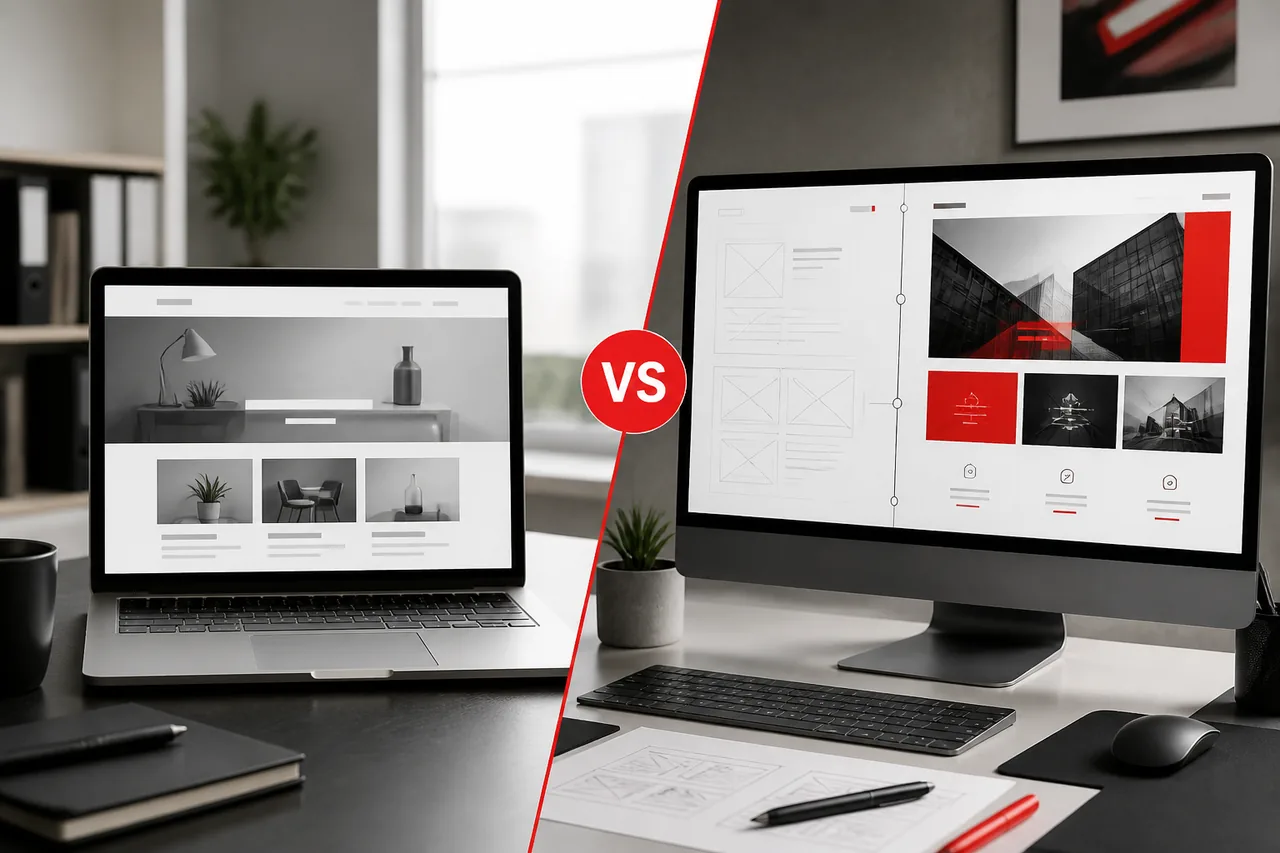
Custom WordPress vs Template: Benefit Snapshot
| Business need | Template tendency | Custom WordPress website |
|---|---|---|
| Brand differentiation | Generic patterns | Unique system |
| Campaign publishing speed | Often fragile | Block/content model support |
| Mobile performance | Hit-or-miss | Designed to targets |
| SEO operations | Plugin-heavy | Template-level foundations |
| Integrations | Workarounds | Planned architecture |
| Growth over 24 months | Common bottleneck | Roadmap-ready |
| Year-1 cost | Usually lower | Usually higher |
| Multi-year ROI | Weak if growth is real | Stronger for growth businesses |
When a Template Is Enough
Choose a template when:
- You need a simple credible presence quickly
- Requirements are standard (services, about, contact, blog)
- Budget must prioritize product/sales first
- You will keep the stack lean and avoid option bloat
- You accept a likely future upgrade path
A disciplined template launch is better than an overbuilt custom project with unclear goals.
When Custom Development Is the Better Choice
Choose a custom WordPress website when:
- Brand and trust are competitive advantages
- SEO and paid traffic are material growth channels
- Marketing needs frequent landing pages without chaos
- You need CRM, commerce, membership, or portal workflows
- Current site speed/editing/security already hurt results
- You expect meaningful digital growth in the next 12-24 months
If platform alternatives are on the table, compare WordPress vs Webflow. If your stack is builder-heavy, see custom WordPress vs page builders.
Real-World Business Scenarios
Scenario A: Professional services firm
A law, healthcare, or consulting firm competes on trust. A template homepage undermines premium positioning. Custom service templates, proof modules, and consultation paths usually pay for themselves in lead quality.
Scenario B: Growth-stage B2B company
After product-market fit, the website must support campaigns, resources, and CRM hygiene. Custom blocks and integrations stop marketing from waiting on developers for every page.
Scenario C: eCommerce brand
Demo WooCommerce themes can launch stores. Operations, checkout UX, and catalog complexity eventually demand custom architecture. See WooCommerce Development Company.
Scenario D: Multi-location business
Location pages, local proof, and lead routing need a content model. Templates often treat locations as afterthoughts. Custom systems treat them as growth infrastructure.
Scenario E: Agency partnering for delivery
Agencies that productize client websites often need a custom framework more than another multipurpose theme. Consistency and maintainability become the product.
How Custom WordPress Supports Marketing Teams
Marketing leaders care about velocity and control.
A well-built custom WordPress website gives them:
- Approved components for fast campaign assembly
- Brand guardrails without constant design QA battles
- Fields for SEO metadata and structured content
- Predictable form-to-CRM behavior
- Landing templates that protect Core Web Vitals
That is why many “we need a redesign” requests are actually “we need an operable publishing system” requests.
How Custom WordPress Supports Operations and Sales
Beyond marketing:
- Sales gets cleaner lead context from better forms and routing
- Operations gets fewer manual spreadsheet bridges
- Support gets clearer self-serve content structures
- Leadership gets a site that can evolve without constant fire drills
The website stops being a brochure and becomes part of the operating system.
Common Mistakes to Avoid
- Assuming custom means maximum visual novelty
Custom should mean fit-for-purpose, not unnecessary complexity.
- Customizing a template until it pretends to be custom
Heavy child-theme surgery often creates the worst hybrid.
- Skipping discovery
Without goals and IA, custom budgets get wasted on the wrong templates.
- Ignoring editor experience
If marketers cannot publish safely, ROI collapses.
- Buying features instead of outcomes
A calculator, portal, or animation only matters if it moves a metric.
- Launching without maintenance
Custom sites still need updates and monitoring.
- Waiting until the template is on fire
Migrating earlier is cheaper than migrating under pressure.
Decision Checklist for Leadership
Score each item yes/no:
- Do prospects compare us against sophisticated competitors online?
- Is the website a primary lead or revenue channel?
- Do we need faster campaign publishing this year?
- Are integrations required for sales/ops efficiency?
- Are speed or SEO already limiting growth?
- Will requirements expand meaningfully in 24 months?
If you answered yes to most, a custom WordPress website is usually the better investment.
What a Strong Custom Project Includes
When you hire a WordPress development company, look for:
- Discovery and success metrics
- Information architecture before polish
- UX/UI for key templates, not only homepage art
- Custom theme/block system
- Performance and SEO foundations
- QA across devices and forms
- Launch checklist (redirects, analytics, backups)
- Training and maintenance path
Process overview: WordPress Website Development Process. Vendor evaluation: How to Choose the Right WordPress Development Company and Best WordPress Development Company in California.
Migration Path: Template to Custom
You do not have to start over blindly.
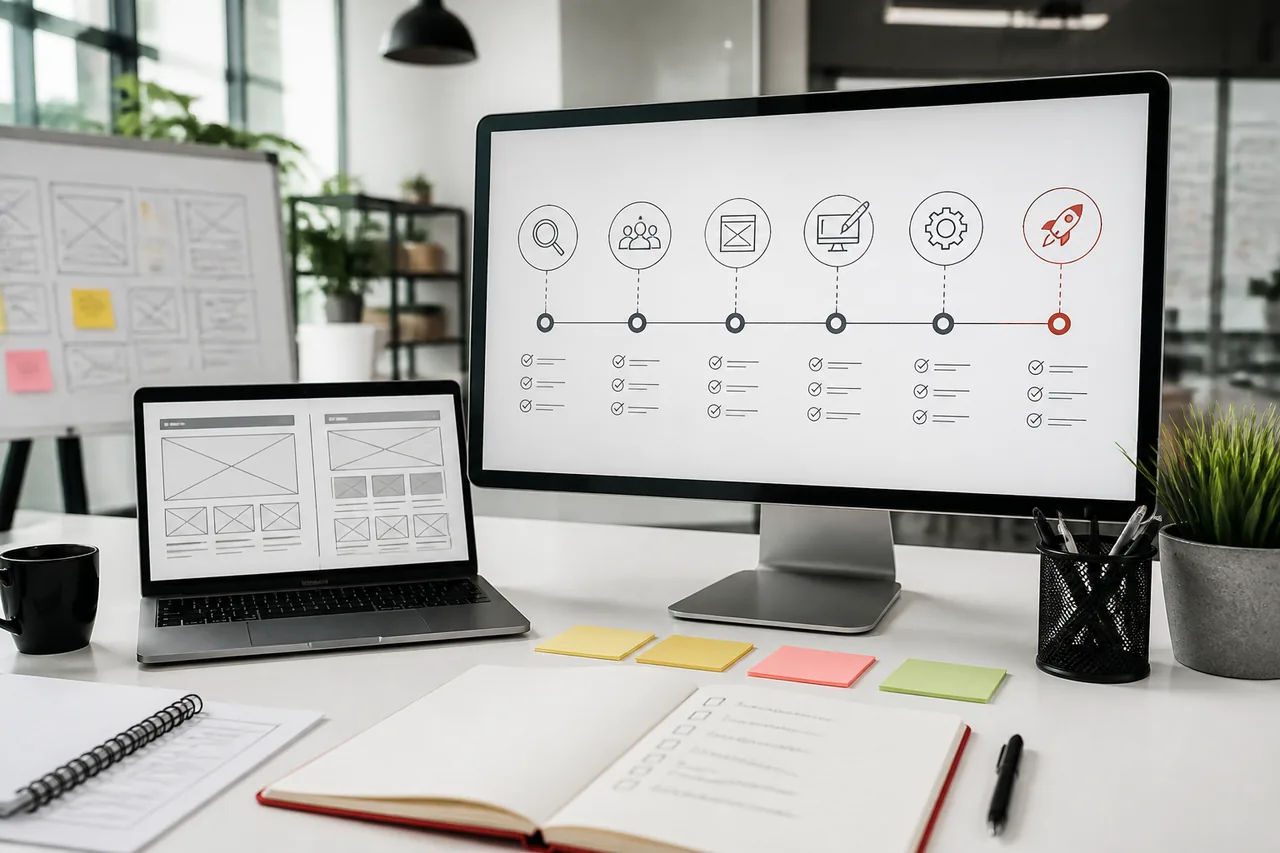
Typical path:
- Audit current templates, plugins, and money pages
- Keep strong content and offers
- Rebuild the design system and critical templates
- Improve editor workflows
- Add integrations in priority order
- Cut over with SEO-safe redirects and QA
Many companies phase this work so revenue pages improve first.
What “good enough for now” should still protect
Even if you stay on a template short term, protect your future custom path:
- Keep admin access and license ownership
- Avoid pirated/nulled themes
- Limit plugin sprawl
- Use a child theme for customizations
- Document what was customized and why
- Track Core Web Vitals on money pages
These habits make a later custom WordPress website migration cleaner and cheaper.
Proof Points Buyers Should Demand
Before approving a custom project, ask for:
- Examples of editor workflows (not only homepage shots)
- Performance approach for mobile templates
- SEO migration experience if URLs will change
- Integration examples similar to your stack
- Maintenance and support model after launch
- Clear assumptions and exclusions in the proposal
A strong WordPress development company educates during sales. A weak one overpromises uniqueness and underdefines scope.
Objection Handling for Decision-Makers
“Custom takes too long.”
Phased delivery can ship high-value templates first. Waiting on a fragile template can cost more time in workarounds after launch.
“Custom is too expensive.”
Compare multi-year ownership cost and opportunity cost, not only invoice one. Use WordPress Website Development Cost for planning bands.
“We can just customize the template heavily.”
Heavy template customization often creates hybrid debt: theme update risk plus custom complexity, without clean architecture benefits.
“We are not enterprise yet.”
Custom does not require enterprise scale. It requires clear goals and a system that will not block the next stage of growth.
Why Choose Kodu Media
Kodu Media builds custom WordPress websites for businesses that need performance, clarity, and room to grow.
We help with:
- Custom WordPress development and theme systems
- Conversion-focused business website design
- WooCommerce and integration-heavy builds
- SEO-safe redesigns and migrations
- Ongoing maintenance after launch
We are direct when a leaner template approach is still enough. Custom should solve a constraint, not inflate a proposal.
Explore:
- WordPress Development Company
- Custom WordPress Theme Development
- WooCommerce Development Company
- Website Maintenance
- Pricing
Frequently Asked Questions
What is a custom WordPress website?
A custom WordPress website is built around your brand, content model, integrations, and growth goals instead of adapting a multipurpose template. It usually includes custom theme architecture, structured editing, and maintainable code.
Is a custom WordPress website better than a template?
It depends on goals. Templates can be better for simple, fast launches. Custom is usually better when differentiation, SEO, performance, integrations, or scalability matter.
Why are custom WordPress websites faster?
They can be faster because templates load only what you need and performance is designed into the build. A bloated custom site can still be slow, and a lean template can be fast. Architecture and discipline decide the result.
Are custom websites better for SEO?
They often make technical SEO and content operations easier over time because structure, metadata patterns, and internal linking can be planned intentionally. Content quality still matters.
How much does a custom WordPress website cost?
Costs vary by templates, design depth, integrations, and migration needs. Use our WordPress Website Development Cost guide and pricing packages for planning ranges, then request a scoped quote.
Can I convert a template website into a custom website later?
Yes. Many businesses migrate from template to custom in phases. Plan URL mapping, redirects, and content inventory to protect SEO.
Is a custom website suitable for small businesses?
Yes, when the website is central to lead generation or brand trust. Some small businesses should still start with a template and upgrade when growth justifies it.
Why should I hire a professional WordPress development company?
A professional team brings discovery, UX, engineering, QA, launch discipline, and maintenance planning. That reduces expensive rebuilds and unclear ownership.
Is a custom WordPress website worth it?
For many growing companies, yes, especially over a multi-year horizon where campaign velocity, SEO compounding, and integration efficiency matter more than the cheapest launch invoice.
Custom WordPress vs template: which should I choose first?
Start with a template only if scope is simple and timeline/budget are tight. Choose custom when the website must differentiate, convert, and scale with the business.
Related Guides and Services
- WordPress Development Company
- Custom WordPress Theme Development
- Custom WordPress Development vs WordPress Themes
- WordPress Website Development Cost
- How Much Does a Website Cost in the USA?
- Best WordPress Development Company in California
- WordPress vs Webflow
- Custom WordPress Development vs Page Builders
- WooCommerce Development Company
- WordPress Maintenance Services
- WordPress Website Development Process
- How to Choose the Right WordPress Development Company
- Signs Your Business Has Outgrown Its WordPress Website
Conclusion: Choose the Website Your Next Stage Requires
A template can get you online. A custom WordPress website helps you compete.
If your near-term need is basic presence, a lean template may be enough. If your website must differentiate the brand, convert traffic, support marketing velocity, and integrate with operations, custom WordPress development is usually the smarter investment.
The decision is less about taste and more about trajectory. Build for the business you are becoming, not only the pages you need this month. When brand, acquisition, and operations all depend on the website, a custom foundation is usually cheaper than repeated template workarounds.
Build a Website That Matches Your Ambition
If your current template is limiting brand, speed, SEO, or growth, it may be time for a custom WordPress website built around your business, not a marketplace demo.
Kodu Media helps companies create fast, secure, scalable, and SEO-friendly WordPress websites designed for measurable growth. Tell us your goals and constraints, and we will recommend the right path, whether that is a focused custom build, a phased migration, or an honest “template is still enough for now.” The best next step is clarity, not a forced rebuild.
Request a free consultation · Get a custom quote · View pricing